Choose a cover and plan the repeat
A plain cushion cover is a manageable surface for a first repeating print. Choose a tightly woven fabric, such as cotton or linen, with enough body to lie flat on a table. A loose or heavily textured weave can interrupt fine lines, so begin with a bold shape rather than a delicate drawing. If the cover can be washed, wash and dry it before printing to remove finishes and allow for any shrinkage. Press it smooth, then place a piece of cardboard inside to stop ink reaching the back.
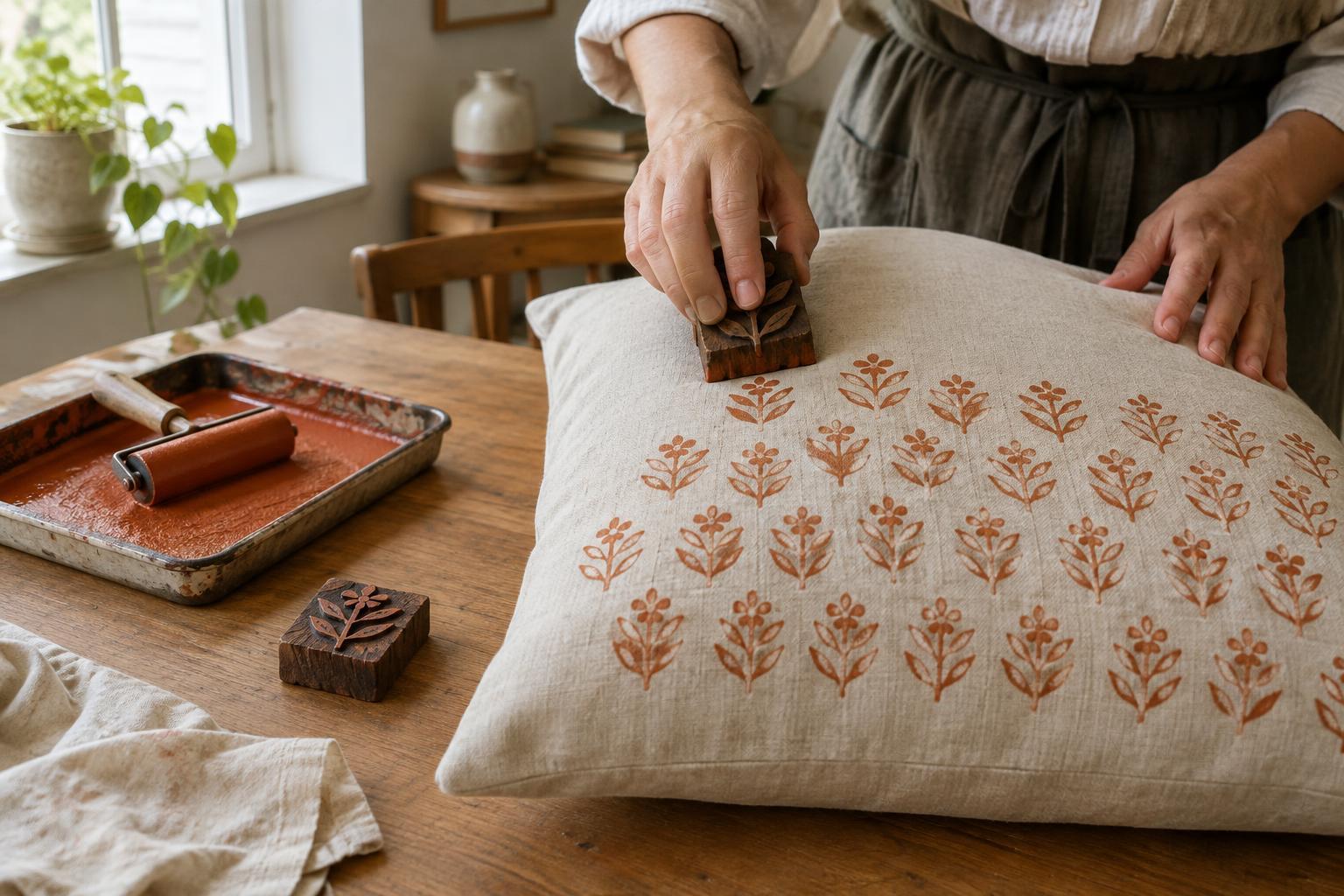
Decide whether the pattern should cover the whole front or sit within a border. Measure the area between the seams, keeping zips, piping, and bulky edges out of the printing zone. A simple motif—perhaps a leaf, arch, or uneven stripe—can create variety when repeated. Sketch a few rows on paper first. Straight rows feel orderly; staggered rows give the same block a softer rhythm.
Make a block that prints clearly
A soft carving block or a suitable rubber block is easier to cut than wood and works well for a small project. Transfer your drawing to its surface, remembering that the printed image will be reversed. Keep the design away from the block’s edges so accidental smudges are less likely. Carve away the areas that should remain the fabric’s original colour, leaving the parts you want to print raised.
Work slowly with a carving tool, pushing it away from your hands and keeping the block steady on a non-slip surface. Broad, shallow cuts are usually enough; deep carving is not necessary for a clean impression. Once the shape is carved, brush away loose crumbs and make a test print on scrap fabric similar to your cover. The test will reveal any stray raised marks and show whether narrow details survive contact with the weave.
Set up a repeat you can follow
Cover your worktable, then put a thin padded layer beneath the cushion cover. A few sheets of paper or a flat piece of felt can help the block meet the cloth evenly, but avoid a surface so soft that the block sinks into it. Smooth the cover without stretching it. Use a ruler and removable fabric marker to place small guides for the top of each row and the centre of each motif. Test the marker on an inconspicuous area and follow its removal instructions.
Space the guides according to the block’s printed size, not just the size of its carved surface. Leave a little room between impressions; slight changes in pressure and placement are part of the appeal of hand printing. For a staggered repeat, start alternate rows half a motif-width inward. Begin near the centre if you want the pattern balanced across the cover, or at one edge if you prefer full motifs to run in a consistent direction. Either way, check the layout before opening the ink.
Print with consistent pressure
Use an ink or paint formulated for fabric and check its instructions for application, drying, and heat setting. Roll a thin, even layer onto the block with a brayer. If you are using a pad intended for fabric printing, press the block onto it evenly instead. Too much colour can fill small carved spaces; too little produces a patchy shape. Make another test impression and adjust before printing the cover.
Lower the block onto the first guide without sliding it. Press across the whole surface, including the corners, then lift straight up. Re-ink for each impression unless your product’s instructions suggest otherwise. Work one row at a time, pausing occasionally to check that the spacing still looks right from a few steps away. Keep your hands clean as you move the fabric. If an impression is lighter than its neighbours, consider leaving it: printing over an existing mark is difficult to align precisely.
Dry, set, and enjoy the finished cover
Leave the printed cover flat and undisturbed for the drying time given by the ink maker. Remove the cardboard only when you can do so without dragging it against wet marks. If heat setting is required, follow the product directions and protect your ironing surface; requirements vary by ink and fabric. Wait until the print is fully set before inserting the cushion pad or washing the cover.
For everyday care, follow the fabric and ink labels. Turning a washable cover inside out and using a gentle cycle may help reduce wear, but a test print is the best way to learn how your particular materials behave. The finished repeat need not be mechanically perfect. Small shifts in colour and placement make the cushion recognisably handmade, while the repeated shape keeps it cohesive enough to sit comfortably on a sofa or chair.