Know what you are caring for
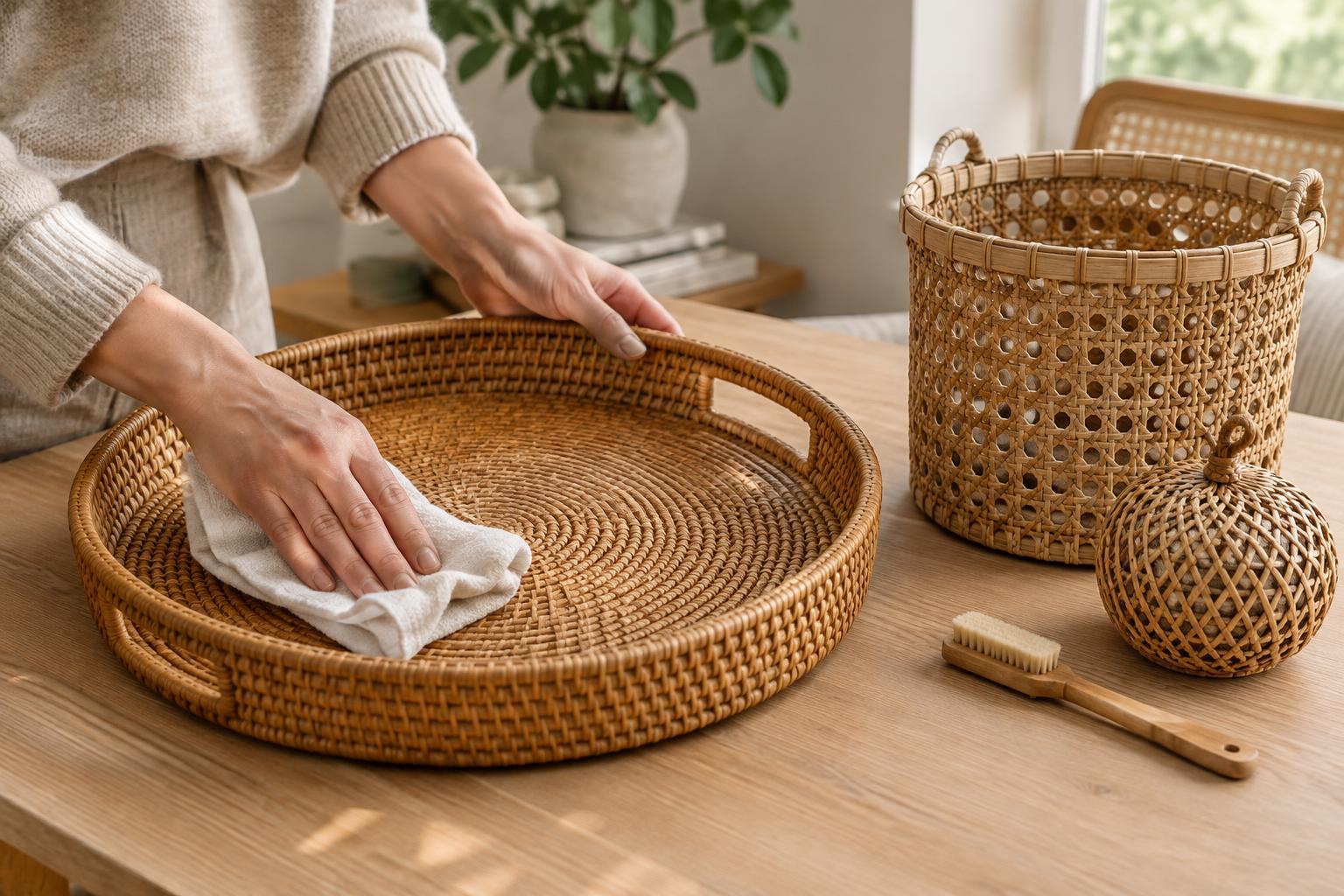
Rattan and cane often appear together in home accessories, but the terms are not quite interchangeable. Rattan refers to a climbing palm whose stems can be shaped into frames or split into weaving material. Cane commonly refers to strips taken from the tougher outer layer of a rattan stem. A tray might have a thicker rattan frame and a finer cane-woven base. Some objects sold in a similar style are made from synthetic strands instead, so check a product label if you have one.
The finish matters as much as the material. An unfinished basket may feel dry and textured, while a lacquered tray may have a smooth, slightly glossy surface. Paint, stain and decorative bindings can each respond differently to cleaning. When the finish is unknown, begin with the gentlest approach: remove loose dust, then test any damp cleaning on a small, inconspicuous area.
Make light cleaning a habit
Dust settles in woven crossings and around handles. Lift it with a soft brush, following the direction of the weave rather than scrubbing across it. A vacuum with a soft brush attachment on low suction can help with deeper gaps; keep the nozzle from catching loose ends. For a small object, holding it over a cloth while you brush makes it easier to see what you have removed.
If dusting is not enough, wipe the object with a soft cloth that is only slightly damp. For a stubborn mark on a sound, sealed finish, you can try a small amount of mild soap diluted in water, after testing it in a hidden spot. Wipe away any residue with a second barely damp cloth, then let the piece dry fully in a well-ventilated place. Avoid soaking, rinsing under a tap or leaving water in woven joints. Moisture can linger there even when the surface feels dry.
Choose a forgiving place to display it
Decorative rattan and cane generally do best away from repeated splashes and prolonged dampness. A bathroom shelf or a spot beside a sink may look appealing, but frequent moisture can make careful upkeep harder. Strong, direct sunlight may also fade a finish or leave the material uneven in color over time. On a sunny shelf, rotate the object occasionally or move it farther from the window.
Give trays and baskets enough space that they are not constantly knocked or compressed. A woven base can snag on a sharp-edged ornament, and a handle can loosen if a decorative basket is repeatedly lifted while overloaded. If you use a tray to group pots or vases, place a waterproof saucer beneath anything that might drip. Check beneath displayed items now and then rather than letting unnoticed moisture sit against the weave.
Handle small flaws without making them worse
A raised strand is not always a sign that an object needs major repair. First look closely at where it begins and ends. If it is still anchored, avoid pulling it or cutting it flush; either step could loosen more of the weave. Move the object to a place where the strand will not catch on sleeves or cleaning cloths. For a valued or structurally damaged piece, a craftsperson familiar with woven furniture or basketry may be better placed to assess the repair.
Take particular care with painted, stained or glossy objects. Aggressive sanding can remove color or expose lighter material beneath, while oil or polish may leave patches or attract dust. Unless the maker recommends a treatment, routine dusting and careful handling are usually a better starting point than applying a product. If you notice a musty smell or visible growth, separate the object from other items and address the damp conditions before deciding whether it can be safely cleaned.
Store it so it keeps its shape
Before storing a woven accessory, make sure it is clean and completely dry. Choose a space with air circulation rather than a damp corner or a tightly sealed container. Do not stack heavy objects inside a delicate basket or pile trays in a way that presses on raised rims and handles. A loose cloth cover can keep dust off without forcing the weave out of shape.
These small habits also make everyday styling easier. A cared-for rattan tray can gather candles or keepsakes on a table, while a cane basket can add texture to an open shelf. Keeping the weave free of grit, giving it room to breathe and protecting it from standing water lets the material remain the focus.