Start with the books, not the bookends
A row of large art books, cookbooks or hardback reference books puts different demands on a bookend than a short row of paperbacks. Tall books have more leverage when they lean, while a tightly packed row can press outward as you pull one volume free. Before choosing a pair of bookends, note the height of the tallest book, the depth of its cover and how much shelf space the group occupies.
Think about how you use the books, too. A display that is rarely touched may stay orderly with lighter supports, but books you remove every day need bookends that remain steady as the row changes shape. If the collection is especially long or mixed in size, divide it into shorter groups. Two modest rows are often easier to support and use than one crowded row.
Look for a stable shape
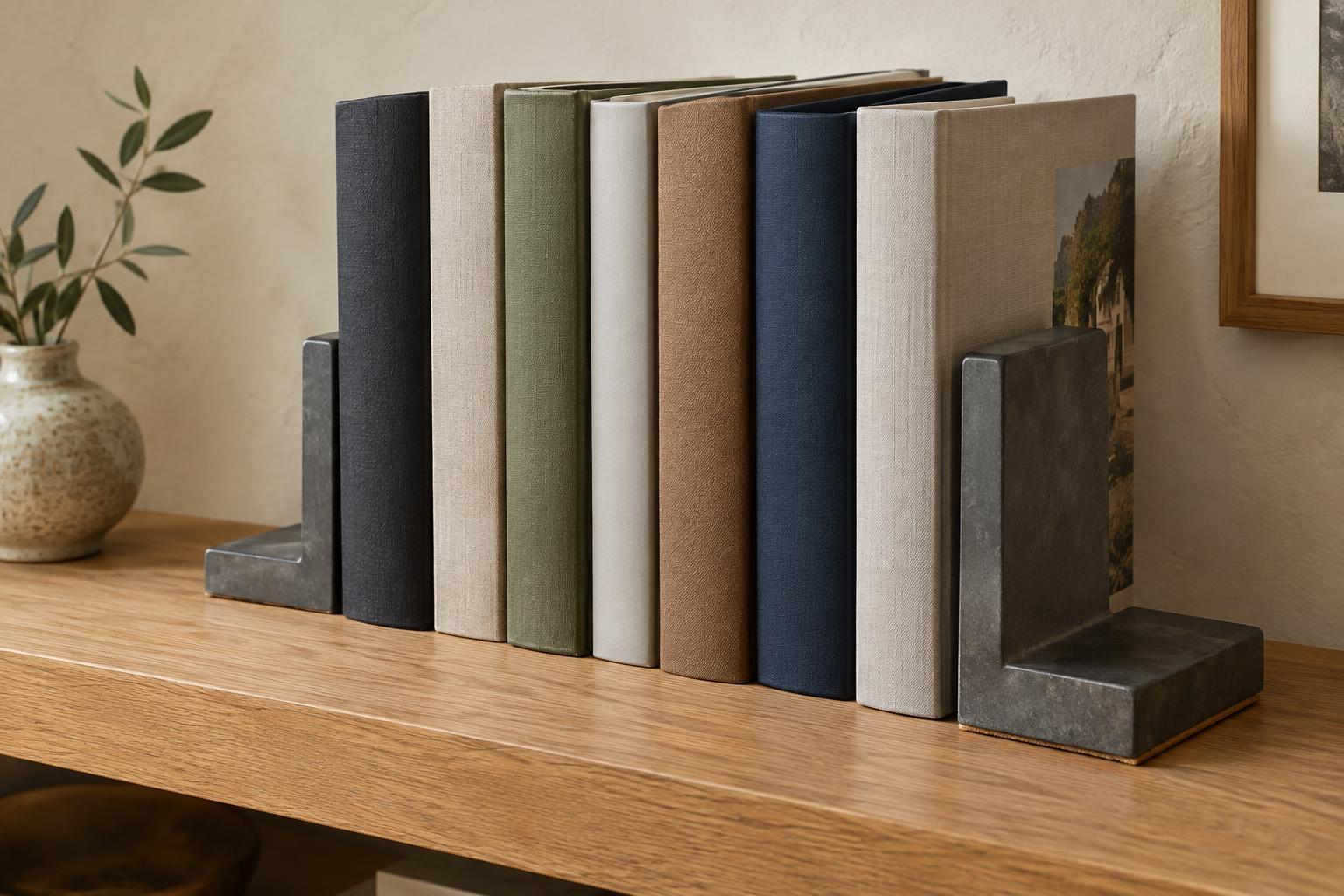
The most useful feature is a broad, flat base that sits fully on the shelf. A common L-shaped bookend works by slipping part of its base beneath the books; their weight helps hold it in place. For heavy volumes, look for a base that extends far enough under the first book to stay engaged when neighboring books are removed. The upright should feel rigid rather than flexing when you press it gently by hand.
Freestanding bookends rely more on their own mass and footprint. A heavy object with a narrow base can still tip if tall books push against its upper edge. Favor a low center of gravity and enough contact with the shelf to resist rocking. An upright that reaches a useful portion of the books’ height can also help prevent the covers from splaying over the support.
Match materials to the shelf
Metal bookends can provide a slim profile, but check that the base lies flat and that the upright does not bend easily. Stone, concrete and ceramic pieces may offer useful weight, although their mass alone does not guarantee stability. Inspect them for uneven bottoms or sharp edges that could mark a shelf or scrape a cover. Solid wood can be a good choice when the base is broad and the joint between base and upright is secure.
Grip matters as much as weight on a smooth painted, glass or polished wood surface. Felt can protect a finish, but some felt glides readily; rubber or silicone pads may hold better if they are firmly attached and do not leave residue on the shelf. Test any padding in an inconspicuous spot if you are concerned about a delicate finish. Also make sure the shelf itself is suitable for the combined weight of the books and bookends, following the furniture maker’s guidance where available.
Test the pair in its real position
Place the bookends on a clean, level shelf and arrange the books as you intend to keep them. Begin with the largest volumes upright, with their bottom edges resting fully on the shelf. Slide each bookend gently against the row rather than forcing the books into a tight wedge. The group should feel supported but still allow you to remove a book without a struggle.
Next, take out a book from the middle and then one from an end, as you would in everyday use. Watch for sliding, tilting or a base lifting at one edge. If the bookend shifts, try a shorter row, a grippier base or a wider and more stable design. Avoid using fragile decorative objects as improvised supports for heavy books, particularly on high shelves or where a falling object could cause injury.
Make the practical choice look intentional
A reliable bookend can still contribute to a shelf’s style. A simple metal shape can recede behind colorful spines, while wood, stone or glazed ceramic can echo other objects in the room. Choose a finish that complements the books without making it difficult to see whether the support is properly positioned.
Leave a little open space beside each group so you can adjust it as books come and go. Recheck the arrangement occasionally, especially after adding larger volumes. The best bookends are not necessarily the heaviest or most decorative: they are the ones that stay steady on your particular shelf while letting you use the books comfortably.