Start with what the labels mean
Brass is an alloy made primarily of copper and zinc. A solid-brass accessory is brass through its metal body, rather than a different material covered in a thin brass layer. “Solid” describes the material, not necessarily the construction: a hollow cast-brass candlestick can still be brass throughout its walls. A brass-plated accessory has a brass layer over a base material, which may be another metal. Both can look similar when new.
Product wording deserves a careful read. “Brass finish,” “brass tone,” and “brass effect” describe an appearance, not a guarantee of brass content. A listing that names the base material and finish is more useful than one that simply says “gold.” Accessories can also combine materials: a brass handle might be attached to a steel fitting, or a brass body might have a protective clear coating. If material matters to you, ask which components are brass.
Inspect the places a finish is likely to wear
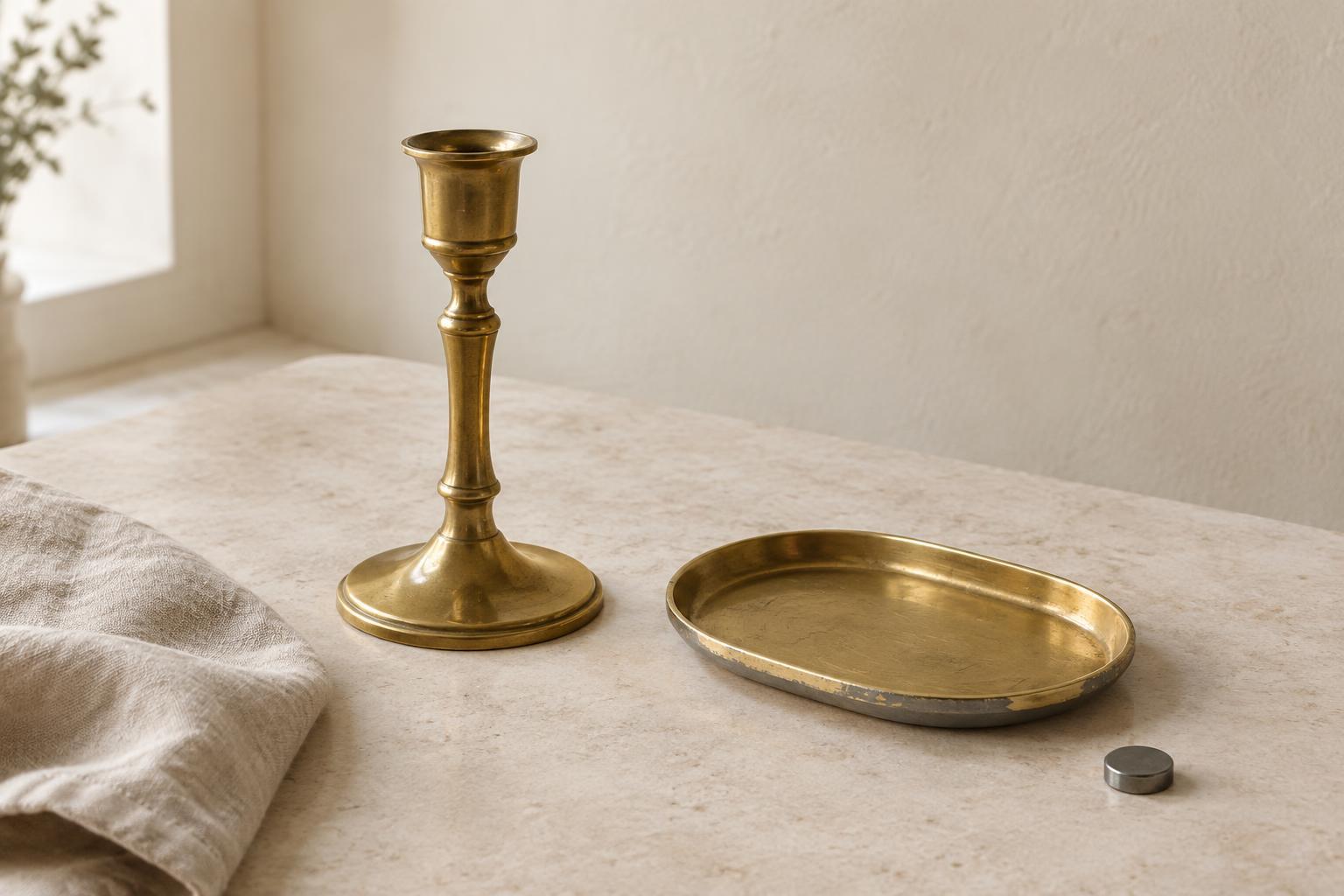
Begin with an undamaged visual inspection in good light. Look at corners, raised details, the underside, screw heads and areas that rub against a shelf or tabletop. If a silvery, dark gray or differently colored material shows beneath the gold surface, the item may be plated or otherwise coated. An even brass color through existing scratches or at an unfinished edge can support a solid-brass identification, though coatings and lighting can make this hard to judge.
Pay attention to the whole object rather than one mark. Some solid-brass pieces are lacquered, painted or given a darker decorative patina, so a change in surface color does not automatically reveal another metal. Conversely, a plated item may show no wear at all. Seams, joints and fasteners can also be made from materials different from the main body. Do not scratch, file or scrape an accessory to test it, especially if it is borrowed, valuable or finished for display.
Use weight and a magnet as clues, not verdicts
An object’s weight may help when you can compare two pieces of similar size and construction, but it cannot settle the question alone. A hollow brass object can feel lighter than a thick plated object, and stone, resin or other components can change the overall feel. Shape matters too: a small solid-brass knob and a large plated tray are not meaningful weight comparisons.
A small magnet offers a limited check. Brass is not normally attracted to a magnet, so strong attraction at the main body points toward a magnetic metal beneath the surface or within the construction. No attraction does not prove solid brass: many potential base materials are also nonmagnetic. Try different areas if the object has feet, screws or handles, and keep the magnet from dragging across a delicate finish. Treat the result as one piece of evidence alongside the description and visible construction.
Choose for the way the accessory will be used
For an object that will be handled often, such as a cabinet knob or a frequently moved tray, solid brass may appeal because ordinary surface wear will not expose a contrasting base material. Brass plating can be a sensible choice for a piece that mostly sits undisturbed, such as a decorative figure on a shelf. The durability of any particular piece also depends on its construction, coating and the care it receives; material alone does not guarantee quality.
Decide whether you welcome a changing surface. Uncoated brass can darken or develop uneven coloration over time, particularly where it is touched. A clear coating may slow that change but can itself wear. A plated surface can also change with use, yet vigorous polishing risks thinning or damaging its finish. If you want a consistent bright look with little intervention, check the maker’s care guidance rather than assuming either label will deliver it.
Clean gently and buy with clearer questions
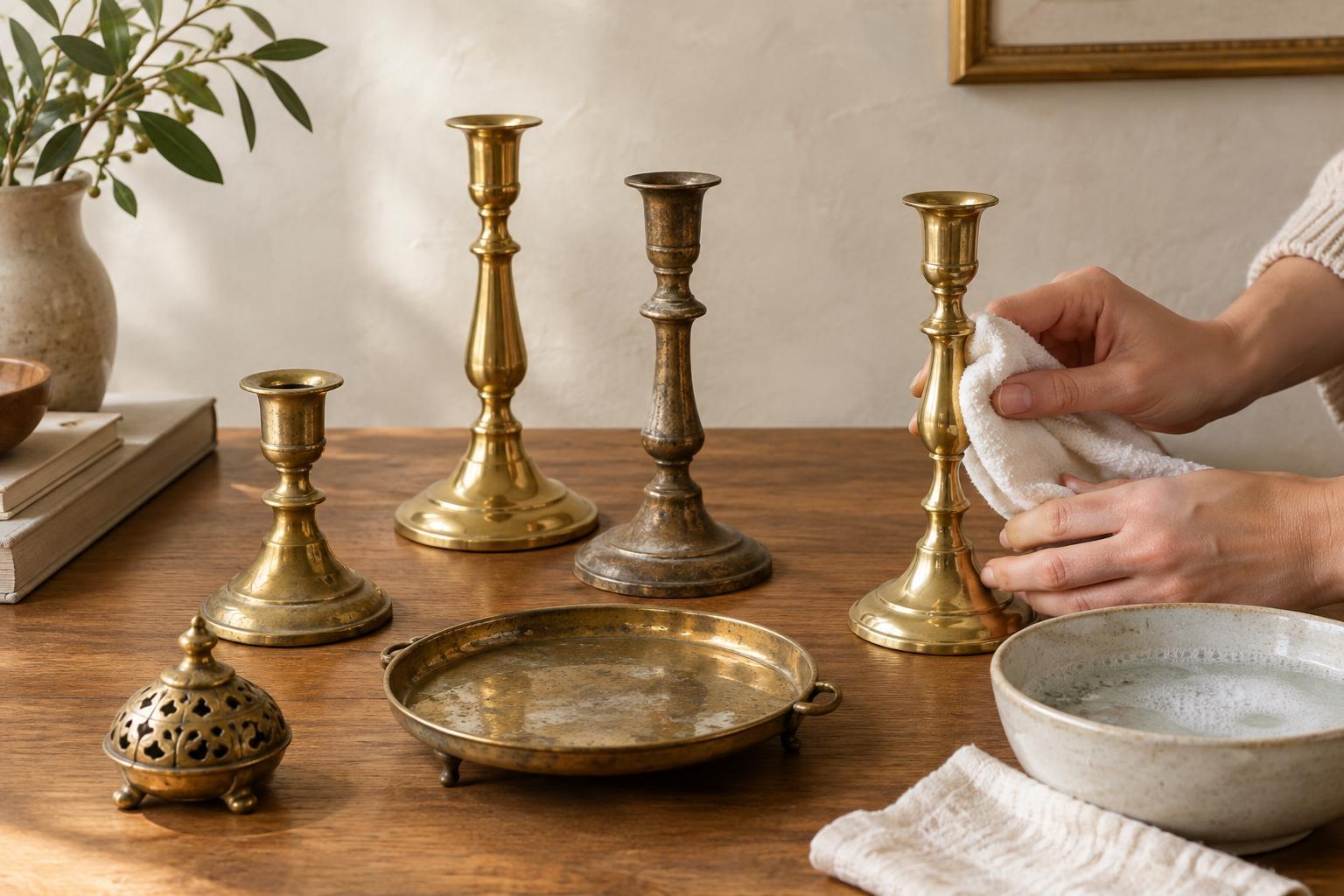
For routine care, dust with a soft cloth. If needed, use a slightly damp cloth, then dry the accessory thoroughly, paying attention to seams and recesses. Avoid abrasive pads and strong cleaners unless the maker specifically recommends them for that exact finish. Brass polish may be suitable for some uncoated solid-brass pieces, but it is not a safe default for plating or lacquer. Test any recommended cleaner on an inconspicuous area first.
When a listing leaves you uncertain, ask a narrow question: “Is the main body brass all the way through, or is brass applied over another material?” You can also ask whether it has lacquer and whether its feet, fasteners or handles differ from the body. A seller may not know every detail, especially for an older piece. In that case, describe it in your own plans as brass-colored or brass-finished rather than treating an attractive surface as proof of solid brass.