Why test a textile before its first wash?
A richly colored cushion cover or table runner may look stable when dry but release some dye when wet. That loose color can tint pale areas of the same item or transfer to other laundry. A small test cannot guarantee that an entire wash will be trouble-free, but it can help you spot an obvious risk before the textile goes into a full load.
Testing is particularly useful for new dark or vivid fabrics, pieces with contrasting light and dark panels, and handmade items whose dye or washing history is unknown. Start by reading the care label. If it says the item should not be washed in water, do not use a wet test as permission to wash it. For a washable piece, use the label’s temperature and handling instructions as your starting point.
Run a small color-transfer test
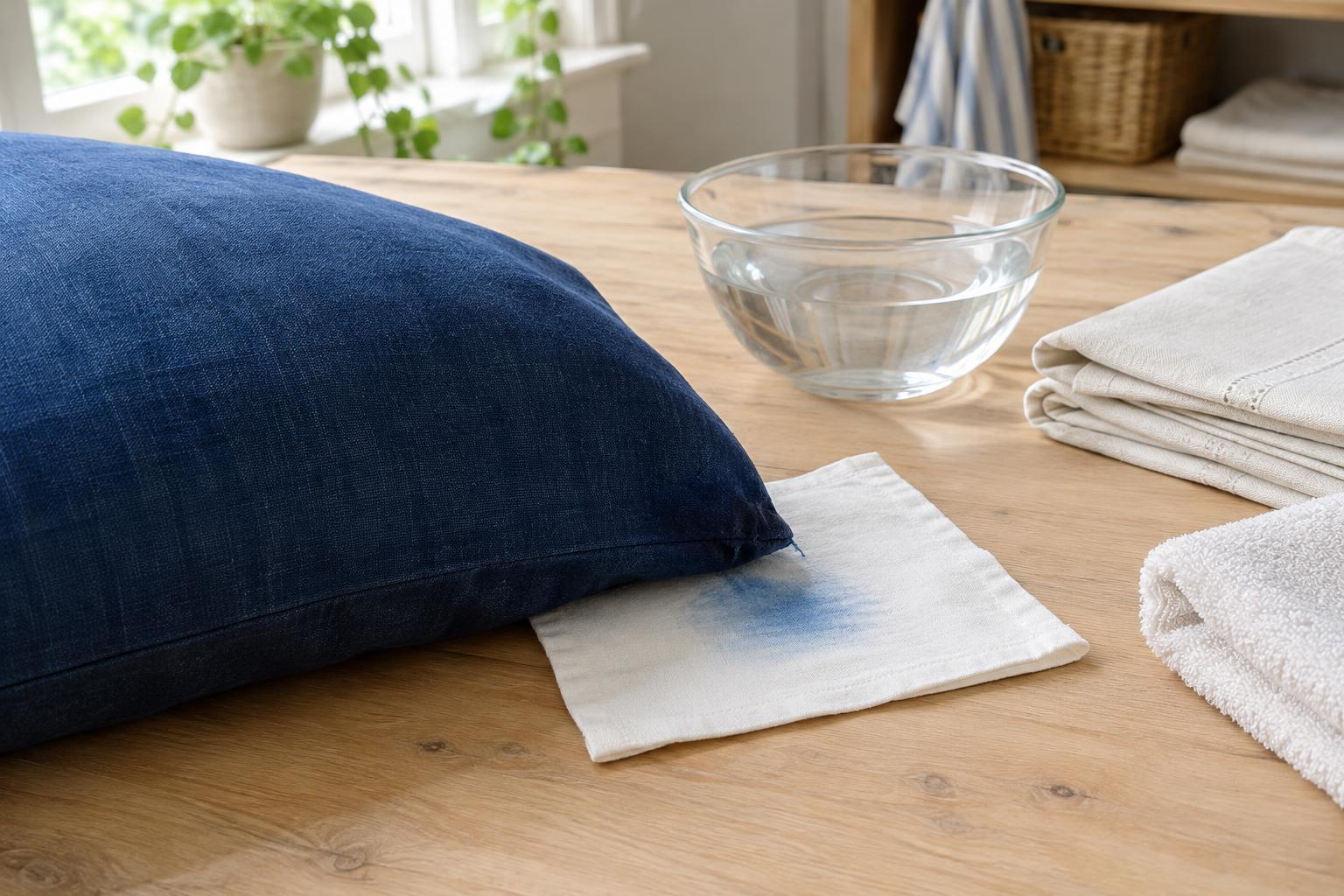
Choose an inconspicuous area, such as an inside seam allowance or the back of a hem. Dampen a clean white cloth with cool water, then press it against the colored fabric for a short time. Lift it away and check for color. Use a fresh part of the white cloth to rub the same area gently a few times. Pressing and rubbing answer slightly different questions: one checks whether moisture lifts color, while the other adds the friction that may occur during washing or use.
For a washable textile with several strong colors, test each color separately. Pay extra attention where a dark border meets a pale center. If the care instructions permit washing with detergent, you can repeat the test with a little diluted detergent on a fresh white cloth. Remove any test residue as the label directs, and let the spot dry fully before judging whether the fabric’s own color or surface has changed.
Keep the test modest. Vigorous scrubbing may damage the finish or fibers without telling you much about a normal wash. If even a small wet patch would be risky for a delicate or structured item, follow its care instructions rather than experimenting.
What the result can and cannot tell you
Visible color on the white cloth means you should expect some potential for transfer. It does not tell you exactly how much dye a full wash will release. Conversely, a clean test cloth is reassuring but not a guarantee: a longer soak, warmer water or more agitation can produce a different result.
Also look at the tested textile itself. A pale ring, dulled patch or softened surface may matter even when little dye appears on the white cloth. If a multicolored item has light sections beside dark ones, washing it alone will protect other laundry but will not necessarily prevent color from moving within the item. In that case, the care label and the construction of the piece deserve particular attention.
Wash more cautiously when color transfer is a concern
If the item is machine washable but your test shows transfer, wash it separately the first time, using the water temperature and cycle allowed by its label. Avoid leaving it wet in a heap or soaking it for longer than directed. Remove it promptly when the cycle ends so damp, folded sections spend less time pressed together.
After that first wash, check both the textile and the wash water’s effect on any light details before deciding whether to combine it with other items later. Repeat cautious separation if color still appears to move. Test again when you acquire another piece, even one that looks similar: appearance alone cannot establish how its dye will behave. A few minutes of checking can help you choose a washing plan without treating every colorful household textile as if it needs identical care.