Start with the vase’s intended use
A vessel shaped like a vase is not necessarily made to hold water. Some ceramic pieces are intended for dried stems or display only; others have a drainage hole because they are planters. Before buying, check the maker’s description or label for words such as “watertight” or “for fresh flowers.” If the description is silent, treat the vase as untested rather than assuming that its glossy exterior will protect your table.
Look into the opening as well as at the outside. A glazed interior offers a better starting point for holding water than an exposed, absorbent clay interior, though glaze alone is not a guarantee. Check that the bottom is solid and that the opening gives you enough room to clean and dry the inside. A narrow neck may hold a few stems beautifully, but it can also make it difficult to spot a problem near the base.
Inspect the surfaces and structure
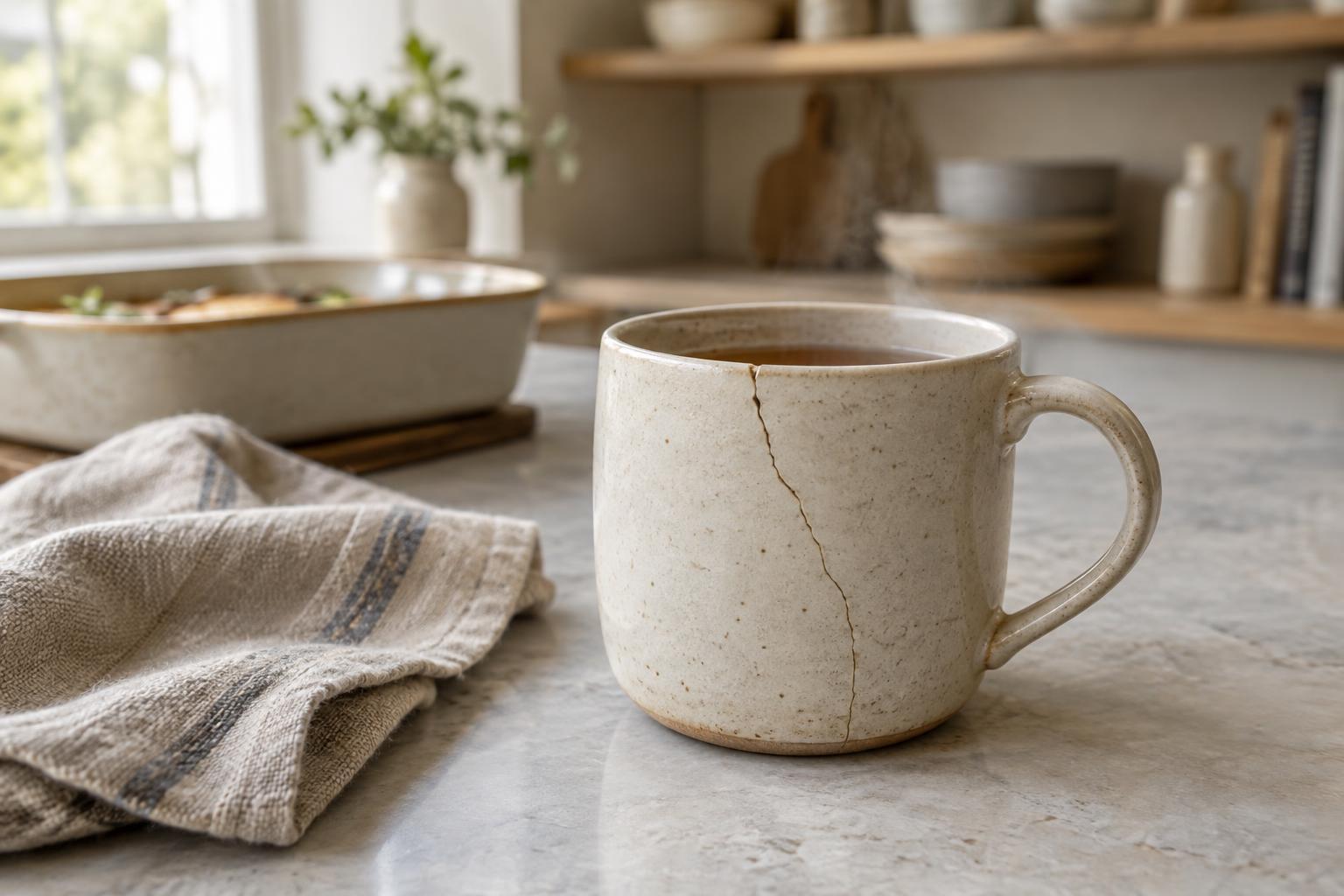
Turn the vase slowly in good light. Look for chips, visible cracks, tiny holes in the glaze, or a seam that appears to have opened. Pay particular attention to the lower walls and the join between the body and the base, where a slow leak may be hard to see once the vase is on a shelf. A hairline crack is a reason to avoid using the piece for water, even if it seems sound when empty.
Fine lines in a glaze, often called crazing, do not always mean water will pass through. They do mean that appearance alone cannot settle the question. Likewise, an unglazed foot ring is common on ceramics and is not by itself proof of a leak. What matters is whether water can reach and travel through an unsealed or damaged part of the vessel.
If you are considering an older or handmade piece, ask whether it has been used successfully with water. That answer is helpful, but a fresh check is still worthwhile: a vase can be damaged in storage or transport. Handle a delicate or valuable piece conservatively rather than filling it immediately and placing it on furniture.
Run a simple water test at home
Test a new or uncertain vase on a waterproof tray or in a sink, away from wood, paper, and textiles. Make sure the outside is dry, then add cool water to about the level you expect to use for flowers. Note the waterline and leave the vase undisturbed for several hours, ideally checking it again the next day. A dry sheet of paper towel placed beneath it can make a small seep easier to notice, provided the whole setup sits on a surface that water cannot damage.
Check the base and lower walls for damp patches, and look for a falling waterline that cannot be explained by a spill. If you find moisture, empty the vase and let it dry fully before examining it again. Moisture on the outside can sometimes be condensation rather than a leak, especially when cold water meets warm, humid air. Repeating the test with room-temperature water in a dry setting can help you tell the difference. Do not rely on a vase that repeatedly leaves its base damp.
Use a liner when the vase is decorative, not watertight
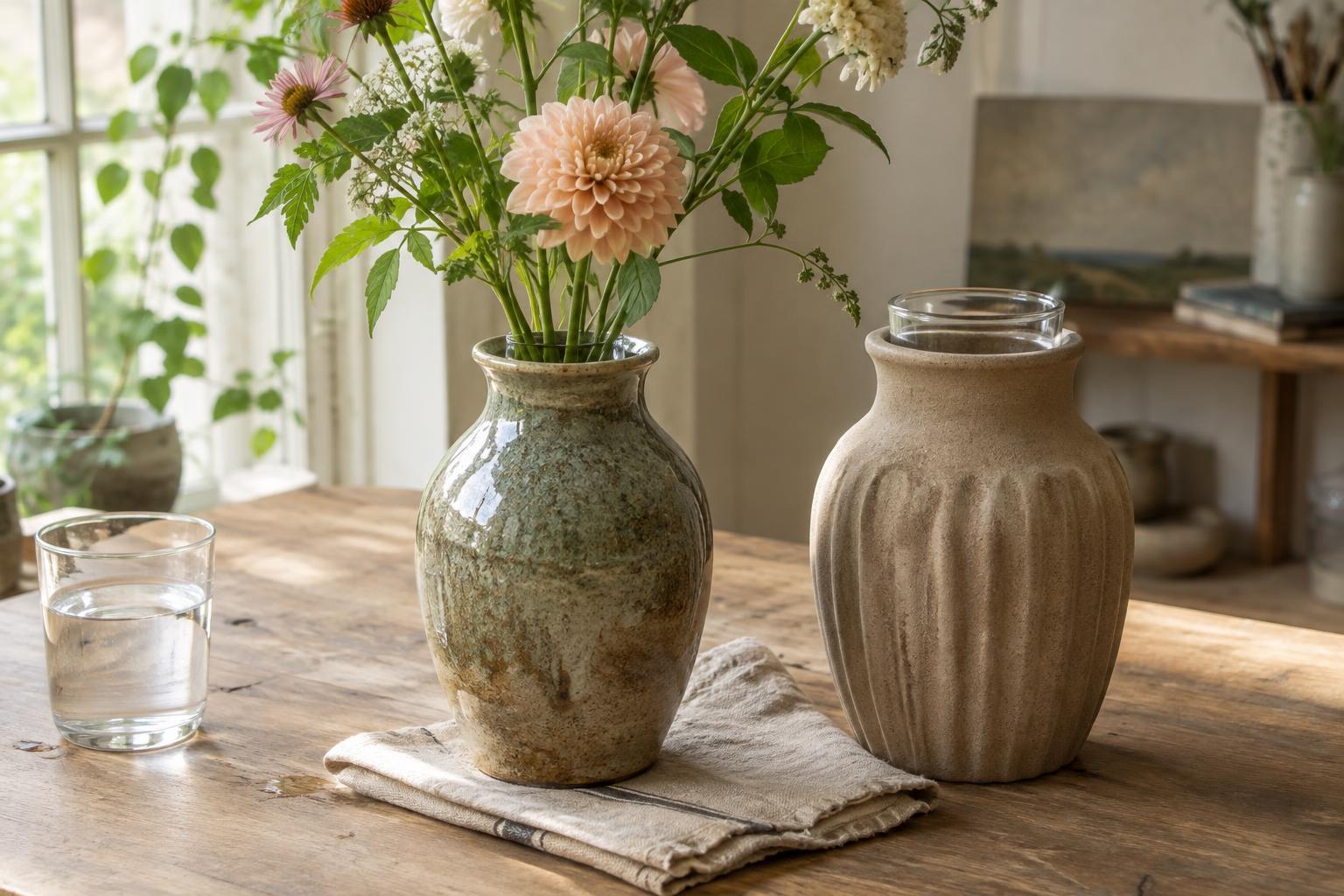
A removable glass or plastic container can let you enjoy fresh stems in a decorative ceramic vessel without putting water against the ceramic. Choose a liner that fits through the opening, sits securely, and is tall enough for your intended water level. Check that you can lift it out without tipping it; a liner that disappears deep inside a narrow vase may be impractical for regular use.
This approach is particularly useful for porous, visibly cracked, or hard-to-clean pieces. Keep the water inside the liner, and dry any splashes from the outer vase promptly. If a liner will not fit, consider dried stems instead of trying to seal an unknown vessel. A coating applied at home may be uneven or wear with use, so it is not a dependable substitute for a sound, watertight container.
Keep the vase and its surroundings dry
Even a vase that passes a water test benefits from routine care. Change flower water regularly, rinse out residue, and let the vessel dry before storing it. Avoid striking the rim or base against a sink: a small chip can turn a reliable vase into an uncertain one. If you later notice a crack, repeat the water test before using it for fresh flowers again.
For display, set the vase on a water-resistant tray or coaster, particularly on a wooden shelf or table. This catches the occasional drip from arranging stems and gives you a chance to notice a slow leak early. The most useful choice is not always the vase with the thickest glaze or heaviest body; it is one whose condition, intended use, and performance you have checked before trusting it with water.