Start with the candle, not the holder
Taper candles may look interchangeable, but their bases are not always the same size or shape. Some are nearly straight at the bottom, while others narrow sharply or have a slightly uneven finish. A holder that grips one taper neatly may leave another wobbling. If you already own candles you want to use, bring one along when shopping for holders, or measure its base before buying online.
Measure across the part of the candle that will sit inside the holder, rather than across its widest point. Then compare that measurement with the holder’s stated socket opening. If the seller provides only the outside dimensions of the holder, ask for the inside diameter of the socket. Measurements are a useful starting point, but they cannot fully describe a tapered or irregular opening; a careful test fit remains the best check.
Look for a snug, comfortable fit
A good fit holds the candle upright without requiring force. If the candle drops in loosely, tilts or turns freely, the socket is too wide for that candle. If you have to push hard, twist the candle aggressively or shave away a substantial amount of wax, the socket is probably too narrow. Forcing a taper can crack a delicate holder or damage the candle base.
Check how deeply the candle sits as well as how tightly it fits. A socket that grips only the very tip of the base may not provide much support, especially for a tall candle. One that swallows too much of the taper can obscure its shape and make spent wax harder to remove. If your preferred candles and holders do not match, look for a holder made for that candle size or a purpose-made, heat-appropriate insert recommended for the holder. Avoid improvised wedges made from paper, fabric or other combustible materials.
Check the base and the surface beneath it
Fit at the socket is only half the decision. Set the empty holder on a level surface and check whether it rocks. A broad, weighty base generally offers more reassurance than a narrow, top-heavy shape, particularly with taller tapers. Once the candle is inserted, view it from two directions to see whether it stands straight. A crooked candle changes the balance of the arrangement and may direct drips toward the holder or tabletop.
Think about where the holder will be used. A dining table benefits from a base that does not crowd plates or catch on sleeves; a mantel or shelf calls for enough clearance from anything above or beside the flame. Place holders on a stable, heat-resistant surface away from curtains, greenery and other flammable decorations. A decorative tray can help define an arrangement, but it should not substitute for a stable holder or safe clearance.
Choose a material you can care for
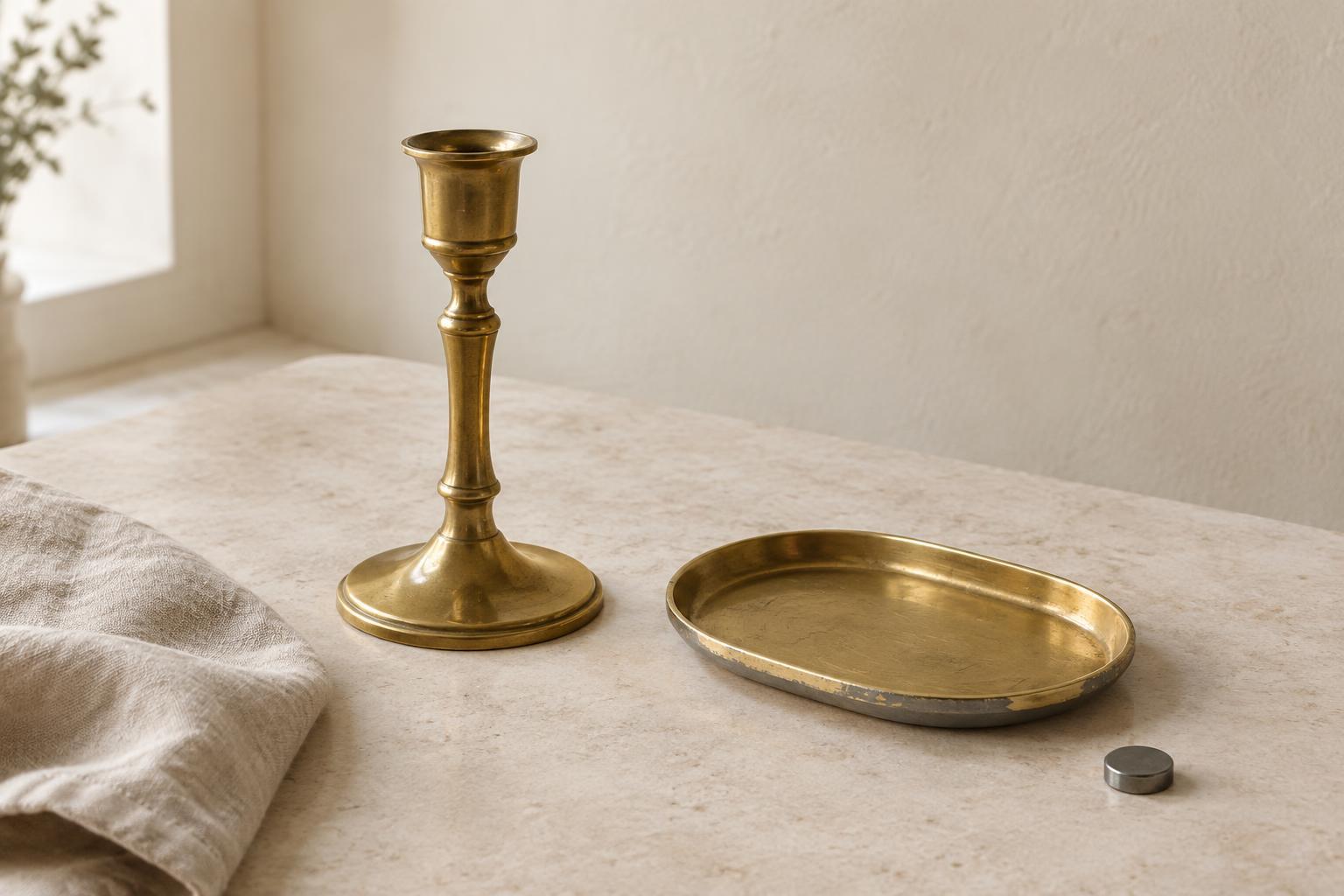
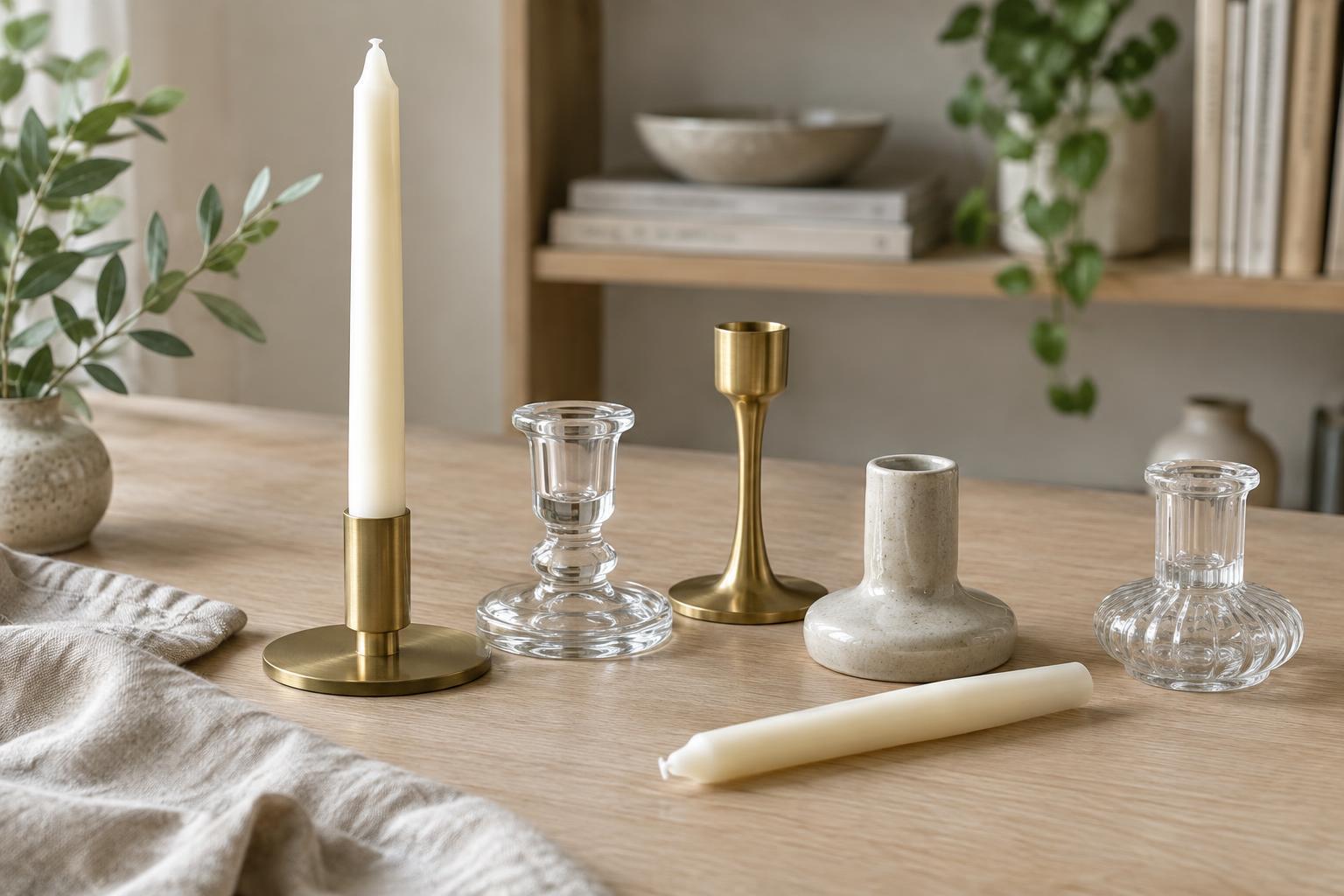
Ceramic, metal and glass holders can each look at home in a decorative display, but their details matter more than the material label alone. Examine a ceramic socket for chips or rough edges that could affect the fit. With metal, check that the socket is firmly joined to the base. Inspect glass for cracks and confirm that the holder is intended for use with lit candles rather than display only.
Consider how you will deal with wax after use. Smooth, accessible surfaces are usually easier to clean than deep crevices or elaborate textures. Let the holder cool fully before handling it, and follow any care instructions supplied by its maker. It is also worth checking whether the candle’s expected drips will fall onto a suitable part of the holder or onto the surface below.
Balance the look with everyday use
Once fit and stability are settled, choose proportions that suit the setting. Low holders can keep sightlines open across a table, while taller holders can give a shelf arrangement more height. Mixing heights often looks more deliberate when the pieces share a finish, color or simple silhouette. Leave enough space between candles for each holder to feel distinct and for the arrangement to remain easy to use.
Before lighting a new combination, do one final check: the candle is seated securely, the holder stands flat and the flame will have clear space around it. Keep lit candles within sight, follow the candle maker’s burning directions and extinguish them before leaving the room. A holder that fits well should make the display feel effortless—not require constant adjustment to keep a taper upright.