Start with the shelf, not the objects
Before choosing a vase or sculpture, measure the shelf’s usable width, depth and height. For an open shelf, consider how much wall space you want the display to occupy. For a shelf inside a bookcase, measure the clear space between the shelves above and below. A piece that technically fits may still look cramped if it nearly touches the top or projects over the front edge.
Look at the shelf from the position where you normally see it. A narrow shelf viewed from across a room may need one object with a clear silhouette rather than several small pieces that merge into visual clutter. A shelf at eye level can support finer details, while a high shelf often benefits from shapes that remain recognizable at a distance. These observations give you a useful starting point before you buy or move anything.
Choose an anchor, then size the supporting pieces
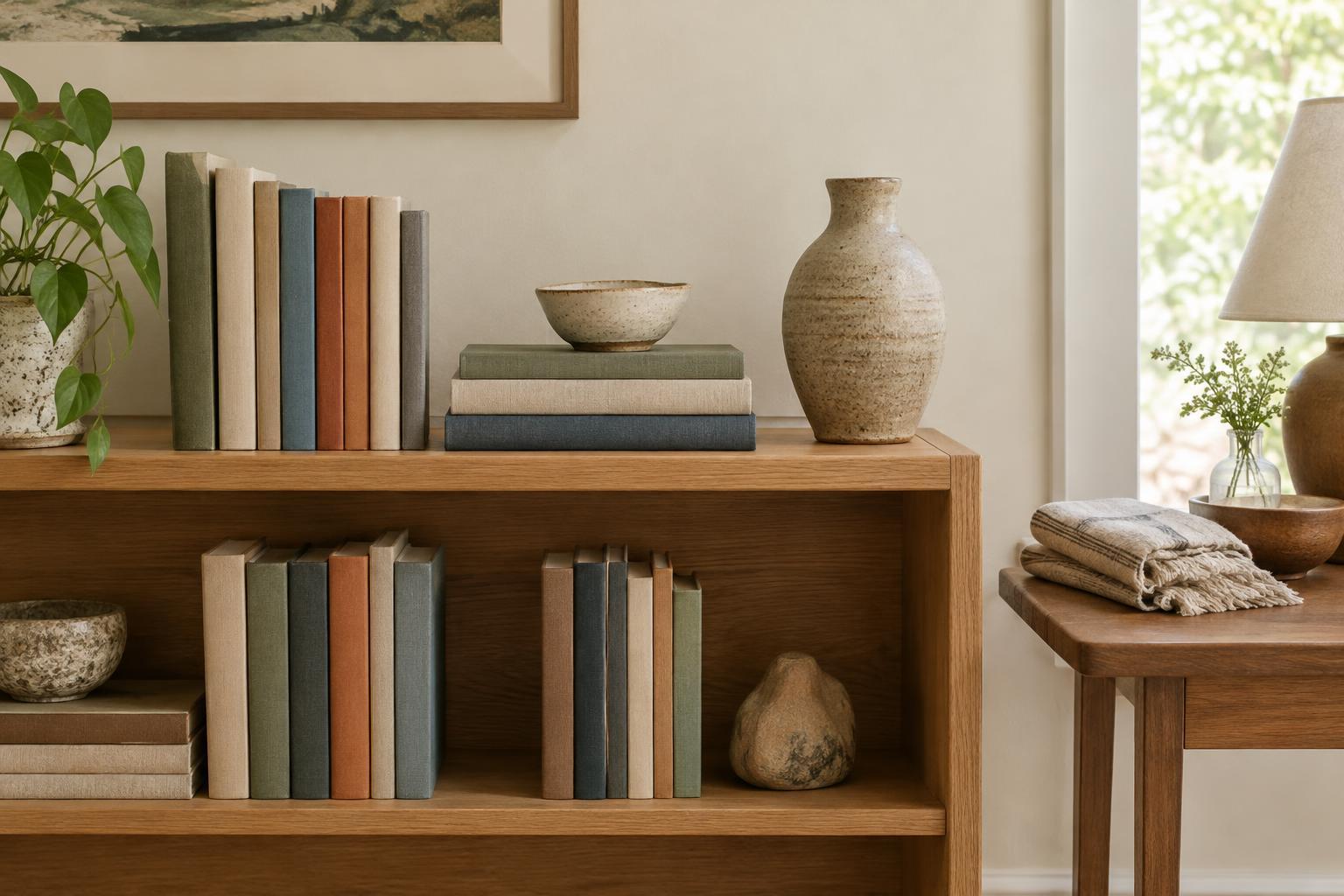
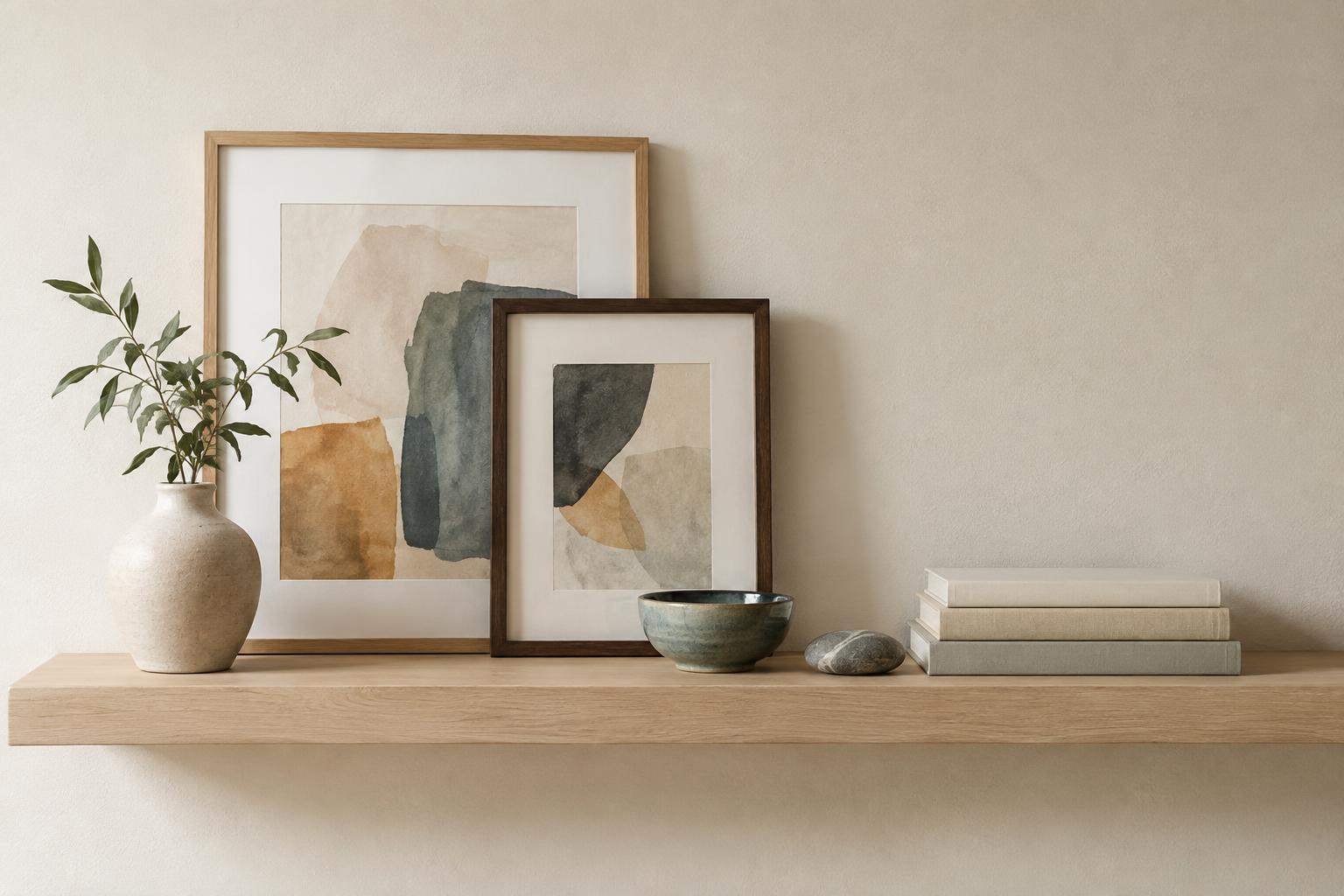
Begin with one anchor object: the vase, framed piece, vessel or stack of books that will draw the eye first. It should feel substantial in relation to the shelf, without filling all the available space. If every item has a similar size and shape, the display can look flat. If every item competes to be the largest, it can feel crowded.
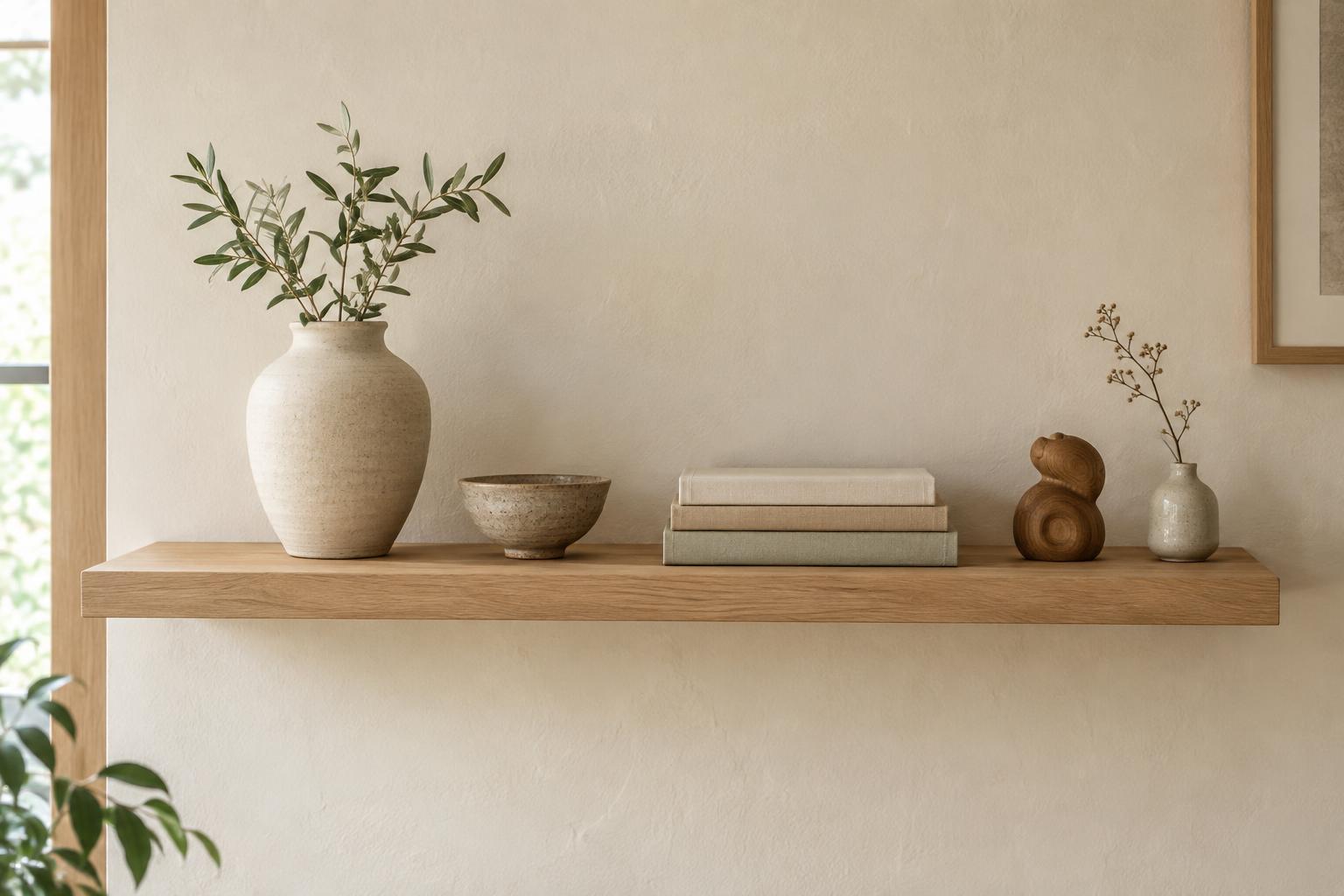
Add smaller pieces that have a visible relationship to the anchor. A low bowl might sit beside a tall vase; a small handmade object might rest on a short stack of books. Think in terms of clear differences in height rather than tiny increments. From your usual viewing distance, you should be able to tell which piece leads and which pieces support it.
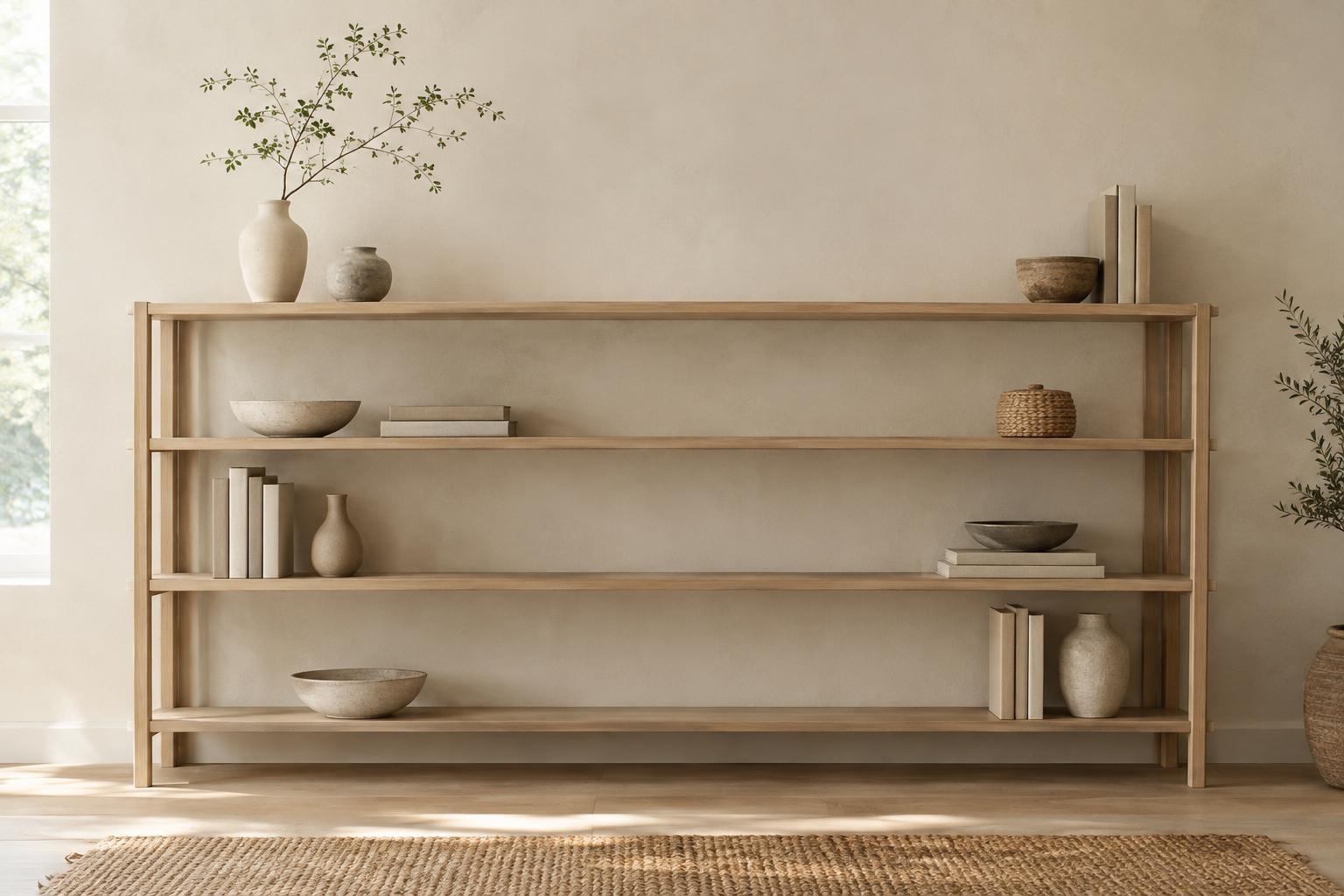
The anchor need not sit in the center. Placing it slightly to one side can leave room for a smaller grouping on the other. This is especially helpful on a long shelf, where spreading objects at even intervals may make them look disconnected.
Check depth and leave room around each shape
Width is only part of the fit. Check that an object’s base rests fully on the shelf and that doors, nearby frames or frequently used items will not bump it. Deep objects can make a narrow ledge feel awkward even when they do not overhang. On a shallow shelf, flatter frames, slim vases and small wall-facing objects may work better than broad bowls.
Leave visible gaps between objects and at least some open shelf at the ends. Empty space helps each shape read clearly and makes the arrangement easier to dust and use. You do not need identical gaps throughout: a pair of related items can sit close together, with a wider pause before the next piece.
If you are unsure whether a candidate is too large, try its outline before placing it. Set a box of similar dimensions on the shelf, or cut a paper template for its base. This quick test can reveal whether the object blocks a sightline or makes the shelf feel crowded.
Use groups to create scale without adding clutter
Several small objects can have enough presence for a long shelf when you treat them as one group. Gather pieces that share a material, color or purpose, then vary their heights and outlines. A small ceramic cup, a squat vessel and a narrow bud vase, for example, can form a compact composition while still leaving open space elsewhere.
Be selective about tiny items. If they disappear when you step back, place them on a tray or a stack of books so they read as part of a larger shape. Avoid piling pieces so high that the grouping becomes unstable or hides the object you most want to show. A tray can also make small items easier to move when cleaning.
Repetition can help on a long run of shelving, but it need not mean identical objects. Two related vessels on separate shelves can provide continuity, while a change in height or form keeps the arrangement from feeling rigid.
Make a final check from different viewpoints
After arranging the shelf, step back and look at it from across the room, then from a nearby seat. Notice whether one object overwhelms the others, whether small pieces vanish and whether the open spaces feel intentional. If the display seems busy, remove one item before adding another. If it feels sparse, try a taller shape or bring two small pieces closer together rather than filling every gap.
Finally, check how the shelf works in daily life. Keep frequently handled objects easy to reach and heavier pieces on a stable surface where they are unlikely to be knocked. If children or pets can reach the shelf, avoid placing fragile items near the edge. The right size is not just the size that looks good in a photograph; it is the size that fits the shelf, the room and the way you use both.