Start with the space, not the listing
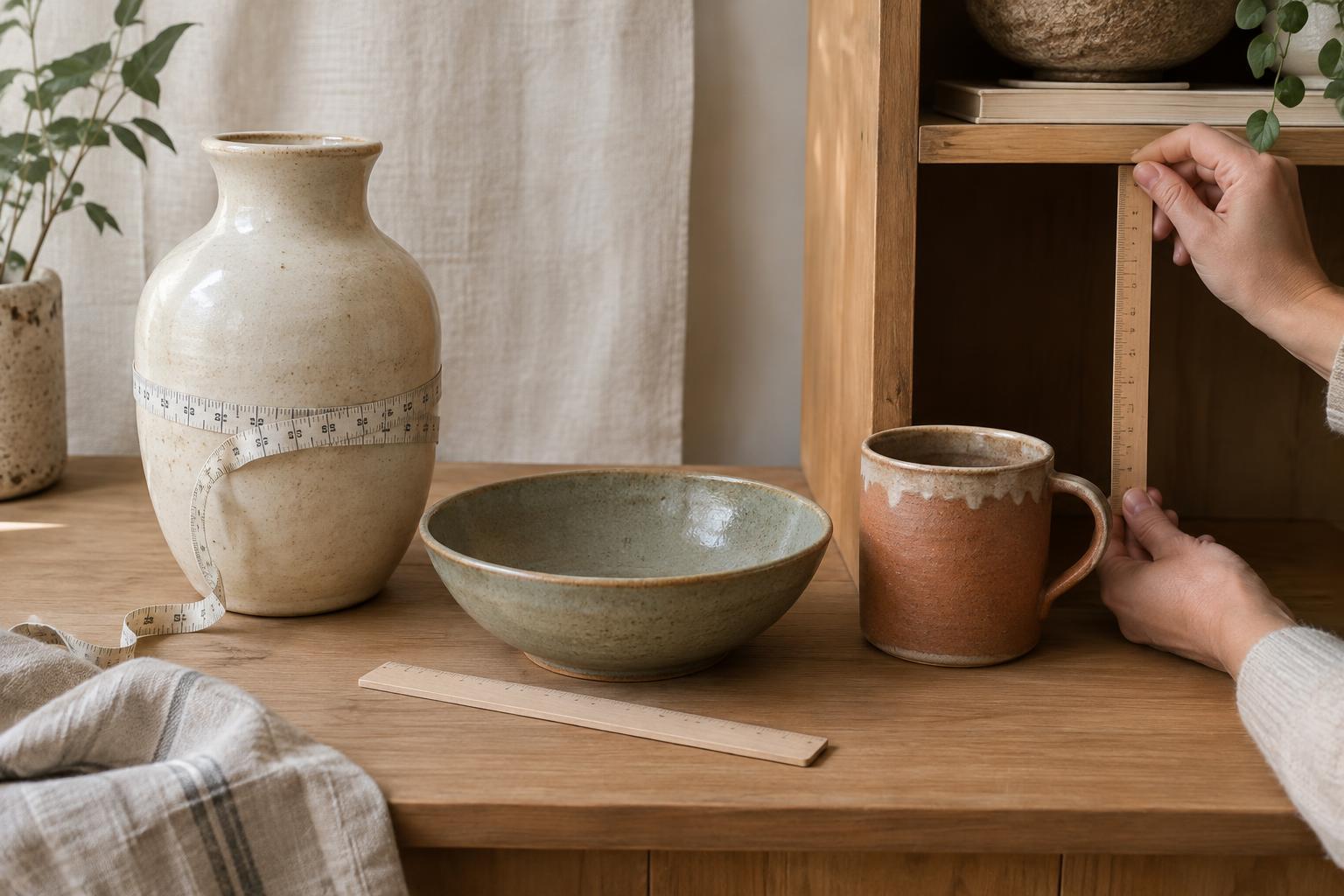
Before looking closely at a pottery listing, measure the place where the piece will go. For a shelf, note the usable height, depth and width, including any space you want to leave around the object. A vase that technically fits beneath the shelf above it may still be awkward to lift out or arrange with flowers. On a table, think about how much room must remain for everyday use and for nearby objects.
Record your measurements in one unit, then convert any listing dimensions into that same unit. If the space is narrow, measure at its tightest point rather than assuming the whole shelf or ledge is uniform. Keep these numbers beside you while shopping; it is easier to assess a piece against a measured space than to remember what that space looks like.
Know what each pottery measurement describes
Height usually runs from the bottom of a piece to its highest point. Width is less consistent: on a round bowl it may mean the diameter across the rim, while on a mug it could mean either the body alone or the span from the far side of the handle to the opposite edge. For an irregular sculpture or a piece with side handles, ask for the widest overall measurement if the listing does not make it clear.
Depth matters for oval platters, handled vessels and objects intended for shallow shelves. An opening measurement tells you whether a vase can hold the arrangement you have in mind, or whether a utensil pot will accommodate your tools. The base diameter or footprint is useful when a piece must stand on a narrow ledge, coaster or tray. Do not assume that the widest part and the part touching the surface are the same size.
Match measurements to the piece’s intended use
For a vase, check height, maximum width, opening width and base width. A narrow opening may help support a few stems but restrict a fuller arrangement. If you plan to display long branches, allow for their height as well as the vase itself. For a bowl, compare the outer diameter with your shelf or table space, then look for depth and, if relevant, an inner measurement. A wide rim can make the usable interior smaller than the overall diameter suggests.
For a mug or jug, note whether the handle is included in the stated width. Capacity can help you understand how much it holds, but it does not tell you how it will feel in your hand or fit in a cupboard. Check height against cupboard shelves and the opening against any tools you expect to use with it. If a piece will sit on a wall shelf, consider its listed weight alongside the shelf’s own guidance and the other items you intend to place there.
Make the dimensions visible at home
Numbers become easier to judge when you turn them into a simple template. Cut a paper circle matching a bowl’s diameter or a vase’s base, and place it where the pottery would stand. For a rectangular or irregular object, mark its maximum width and depth on a sheet of paper or with removable tape. This quickly shows whether it will crowd a lamp, overhang a shelf or leave enough room for a useful grouping.
To picture height, hold a ruler or tape measure upright at the intended spot. Step back and view it from the doorway or from where you normally sit. Product photographs may be cropped or taken from flattering angles, so use them to understand shape and finish rather than as your only guide to scale. Photos beside familiar objects can help, but the stated measurements and your own template offer a more dependable starting point.
Clear up uncertainties before ordering
Handmade and hand-finished pottery can vary slightly in shape and size. If a piece has very little clearance in your space, check whether the listed dimensions are for the exact item or an approximate size for the design. For a one-of-a-kind piece, ask for any missing measurements that affect your decision, such as handle-to-edge width, opening diameter or base footprint. It is also worth confirming whether dimensions include a lid or other removable part.
Keep a short note of your required measurements while comparing pieces. Once your pottery arrives, measure it before arranging a crowded shelf or adding anything inside it. An online purchase works best when you leave a little room for the object’s form, for access around it and for the way you will actually use it.