Check the vase before cleaning
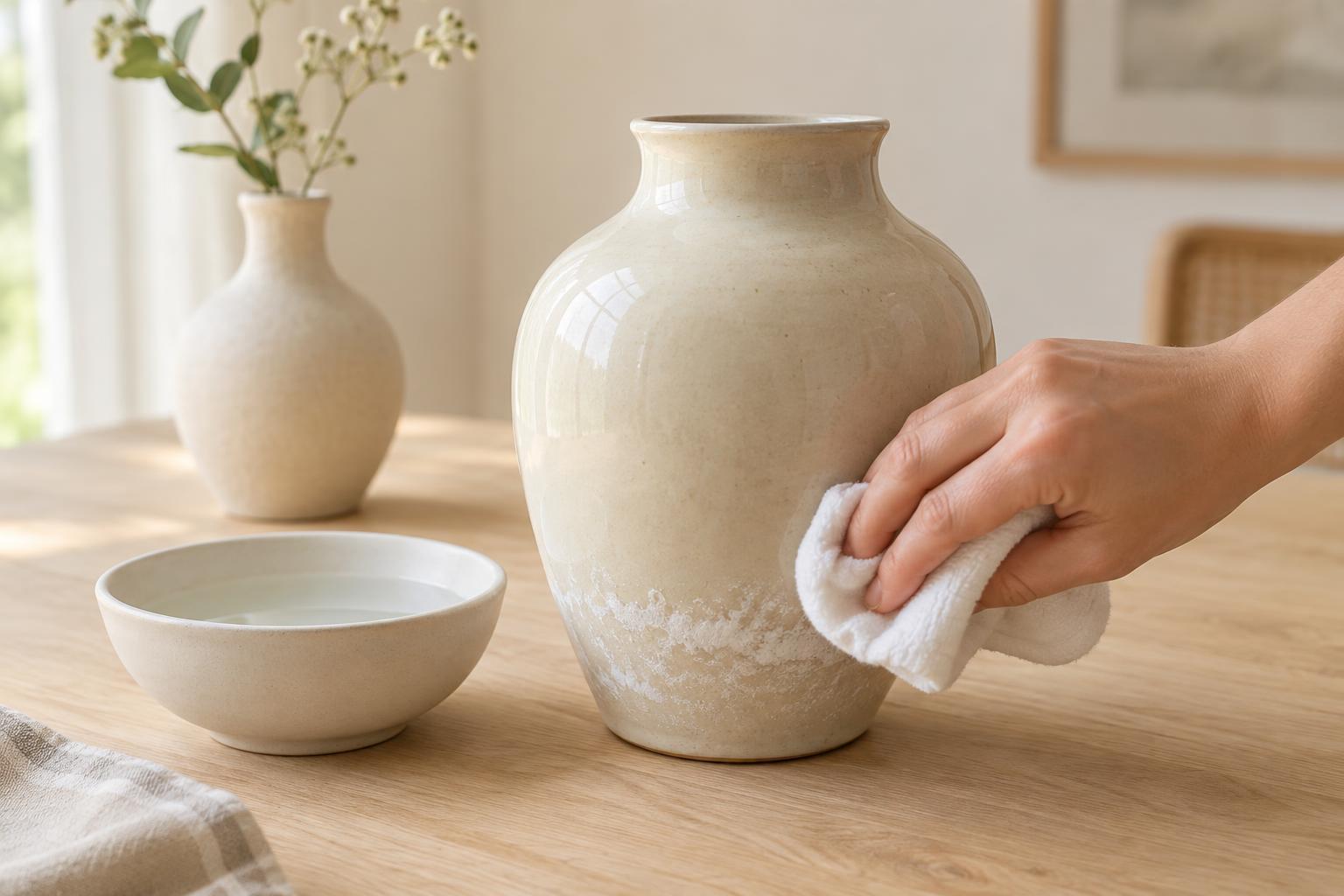
A pale, chalky ring near a vase’s waterline is often a mineral deposit left as water evaporates. Similar residue may collect at the bottom or around the rim. Before reaching for a cleaner, look closely at the surface: dust, dried plant material and worn glaze can resemble a deposit but may need different treatment.
Identify which parts of the vase are glazed. A smooth, intact glaze is usually easier to clean than exposed clay, which may absorb water and cleaning solutions. Be more cautious if the vase has fine cracks in the glaze, chips, hand-painted details, metallic decoration or a matte finish. If it is old, valuable or of uncertain construction, limit cleaning to gentle dusting and seek advice from a ceramics conservator rather than experimenting with household cleaners.
Start with water and a soft cloth
Empty the vase and remove any loose stems or debris. Wipe reachable surfaces with a soft cloth dampened with lukewarm water. For the interior, add a small amount of water, swirl it gently and pour it out. Avoid shaking the vase with hard objects inside: grains, stones and metal tools can scratch the glaze even when the marks you are trying to remove look stubborn.
If plain water leaves a film, try a little mild dish soap in water on an inconspicuous glazed area first. Wipe gently with a soft cloth or sponge, then rinse the cleaned surface thoroughly. A soft bottle brush can help inside a narrow vase, provided its tip and bristles will not scrape the ceramic. Skip abrasive pads and scouring powders; they can dull a glossy surface without removing the cause of the residue.
Treat stubborn deposits on sound glaze
For a remaining chalky mark on intact, undecorated glaze, a brief application of diluted white vinegar may help dissolve mineral buildup. First test a small, hidden spot. If the finish shows no change, dampen a soft cloth with a mixture of equal parts white vinegar and water and hold it against the deposit for a few minutes. Wipe lightly, then rinse well with clean water and dry with a soft cloth. Repeat a short treatment if needed rather than leaving the solution on for a long soak.
Inside a watertight glazed vase, you can pour in just enough diluted solution to cover the waterline deposit, let it sit briefly, and swirl gently before emptying and rinsing several times. Do not use this method on unglazed interiors, cracked or crazed glaze, metallic accents, or finishes that may react to acid. Never combine vinegar with bleach or other cleaning chemicals. If a mark does not respond to gentle cleaning, stop rather than increasing the strength of the solution or scraping at it.
Handle porous and decorative pieces differently
Unglazed ceramic and exposed clay can hold moisture and develop stains beneath the surface. Acidic liquid may soak in, leave a new mark or affect a delicate finish. On these pieces, remove loose residue with a dry, soft brush. If the maker’s care guidance permits water, test a barely damp cloth on a hidden area and dry the vase promptly. Avoid immersing a porous vase or filling it with cleaning solution.
The same restraint applies to painted, gilded or heavily textured decoration, even when the rest of the vase is glazed. Clean around raised details with a soft cloth rather than trying to polish every crevice. A faint trace of residue is preferable to damaged decoration. If the surface feels powdery, flakes or changes color while you clean, stop and let it dry.
Reduce future water rings
After cleaning, let the vase dry completely before storing or displaying it. Tip out water promptly after flowers are removed, and wipe any accessible waterline while it is still damp. This prevents dissolved minerals from being left behind as the water evaporates. If your tap water commonly leaves chalky marks, using filtered or distilled water for cut flowers may reduce visible buildup.
For a decorative vase that is not watertight, use a separate glass insert to hold the flowers and water. An insert also makes regular rinsing easier and helps keep water away from porous clay or vulnerable decoration. Gentle, routine care is usually simpler than removing a thick deposit later.