Start with what the table needs to do
Before choosing decorative objects, notice how you actually use the coffee table. It may hold a mug in the morning, a laptop in the afternoon and a board game at night. Those activities need open, reachable space. Clear the table completely and put back only the things you use regularly for a few days. The space left over is a better guide for styling than a photograph of a table arranged solely for display.
Think about where people sit, too. A bare area near each frequently used seat makes it easier to set down a drink without reaching across a vase or a stack of books. If the table serves several people, a small arrangement toward one end may work better than a centered display. The goal is not to keep the surface permanently empty; it is to make ordinary use feel effortless.
Build a compact arrangement
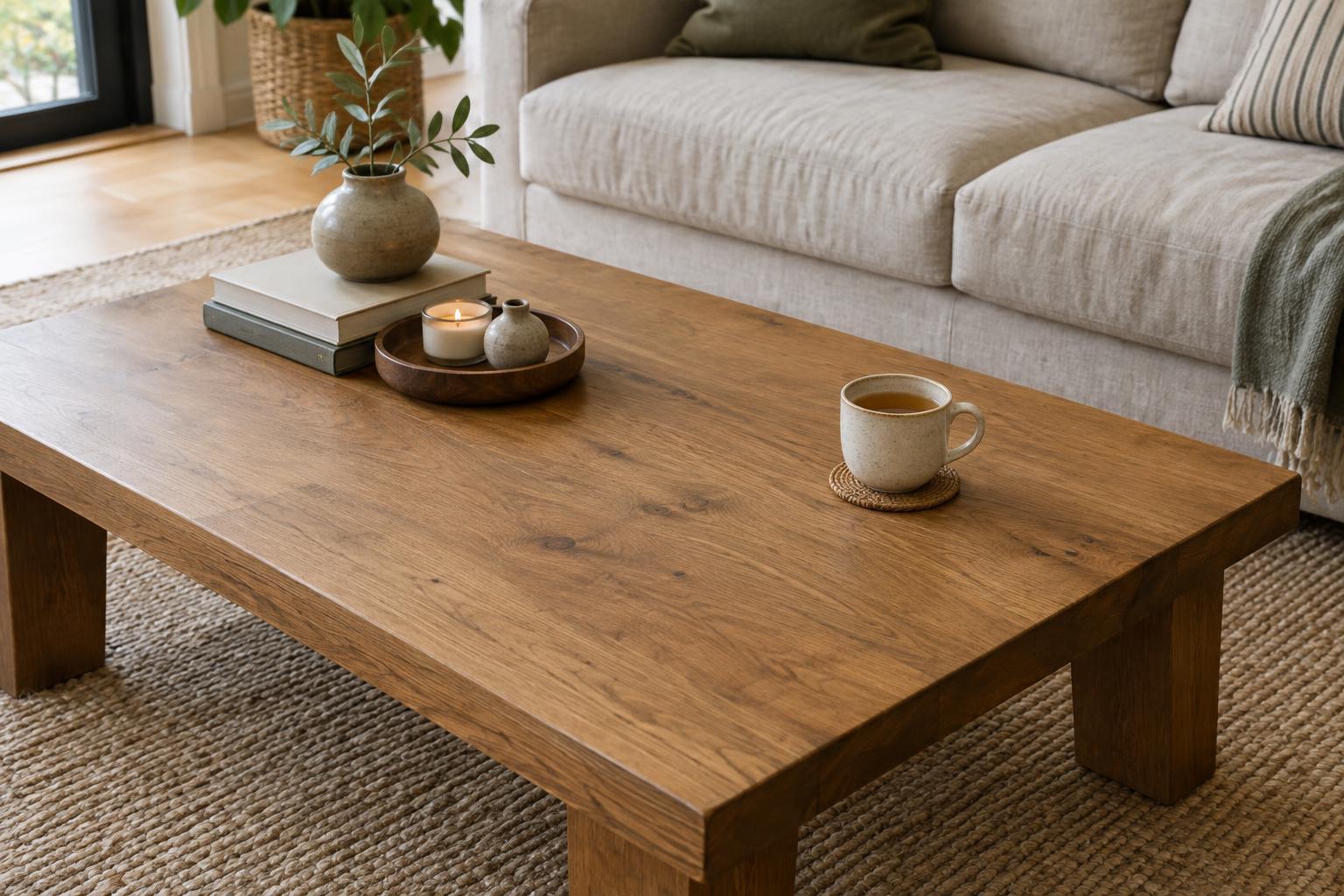
Choose a few pieces that relate to one another without filling the whole tabletop. A low bowl, a book and a small ceramic object can provide differences in shape, height and texture. Leave visible space between the group and the table’s edges so the arrangement reads as intentional rather than scattered. On a small table, one substantial piece may be enough.
A tray can give loose objects a clear boundary. It is useful for items you want close at hand, such as coasters or a remote, and the whole grouping can be moved when you need more room. Choose a tray that is comfortable to lift even when it is full. If you find yourself moving a large, heavy display every evening, make the display smaller instead.
Keep height and visibility in mind
Coffee tables sit between people who may be talking, watching a screen or passing things across the room. Low objects tend to be easier to live with in that position. Try a shallow dish, a modest stack of books or a short vase rather than a tall arrangement that blocks sightlines. If you like branches or flowers, place them where they will not lean into a seat or interfere with the main open area.
Varying height still adds interest: a flat book can support a small object, while a bowl provides a lower, wider shape nearby. Test the view from the sofa, not just from above. An arrangement that looks balanced while you stand over it may feel crowded once you sit down. Adjusting one object’s position can often help more than adding another.
Choose materials that suit the routine
The tabletop and the objects on it should be compatible with how the space is used. Coasters make sense if drinks regularly land there. A washable or wipeable tray may be more practical than a delicate textile beneath snack dishes. If an object has a rough base, add a protective pad or place it on a suitable tray, especially on a surface that marks easily.
Decorative pieces can also be useful. A small lidded box can contain game pieces or spare coasters; a sturdy bowl can hold a remote when it is not in use. Avoid making every useful item part of the display, though. A crowded collection of containers can consume the very space it is meant to organize. Give items that rarely belong on the coffee table a home elsewhere.
Make resetting the table simple
A practical arrangement should be easy to restore after a busy evening. Give each object a loose home rather than aiming for exact placement. Books go back in one stack, small items return to a tray and the main landing area stays clear. This takes less effort when the table holds only a few pieces to begin with.
Let the arrangement change with the household. During a week of puzzles or shared meals, you might remove the vase and keep only a tray of essentials. When the table sees less activity, you can bring back a favorite object. Styling succeeds when the surface supports what happens around it, not when it remains untouched.