Begin with the mantel you have
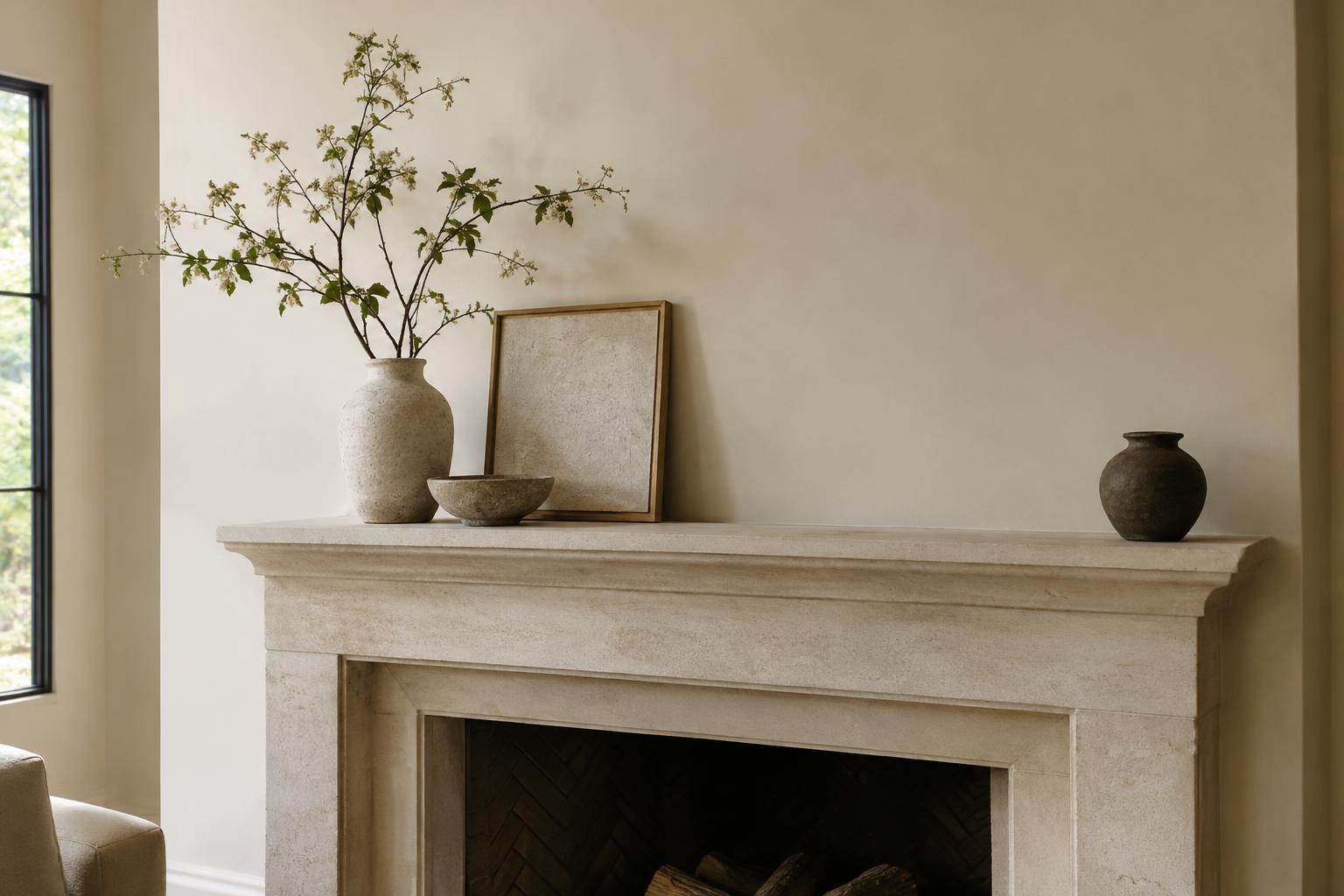
A mantel often sits at the visual center of a room, which can make a perfectly symmetrical display seem like the obvious choice. An off-center arrangement offers another approach: it gives the eye a place to begin, then lets smaller objects carry attention across the surface. The aim is not to make one end heavy and the other empty. It is to balance the visual weight of different objects without copying their positions.
Before choosing anything decorative, measure the usable depth of the mantel and notice what is already above it. A large mirror, artwork or wall-mounted screen may already serve as the focal point. Check that the objects you plan to use have stable bases and do not overhang the front edge. If the fireplace is used, follow its instructions and keep decorations clear of heat and operating parts; a display that suits an unused mantel may not suit a working one.
Place one focal object slightly to one side
Choose a focal object that is easy to see from across the room, such as a framed print, a ceramic vessel or a distinctive decorative object. Set it a little left or right of center rather than pushing it to the end. This modest shift gives the display a direction while leaving room to build on both sides. If a large piece is already fixed above the mantel, treat that as the focal point and offset the objects below it instead.
Step back to the distance from which you usually see the mantel. An object that seems substantial up close can disappear against a broad wall, while a large frame may overwhelm a short mantel. Adjust the focal piece before adding anything else. You should be able to identify it at a glance without feeling that it fills every available inch.
Build a cluster, then give it a counterweight
Next to the focal object, group two or three pieces with different heights. A tall vase might sit beside a low bowl and a small framed photograph. Let their edges overlap slightly from your usual viewing angle, but keep each object accessible enough to lift without disturbing the whole arrangement. Repeating one material or color within the cluster helps the pieces feel related even when their shapes differ.
On the opposite side, use fewer objects as a counterweight. One medium-sized piece may be enough to balance a taller cluster, especially if it has a strong outline or dark color. Another option is a pair of low objects placed close together. Avoid filling both ends by habit: the open stretch between groups is part of the composition, and it gives the eye a pause.
Use height and texture with restraint
A mantel arrangement becomes more interesting when its outline rises and falls. Try a tall object near the focal point, a shorter piece beside it and a low shape toward the outer edge. Keep the tallest items from obscuring artwork or interrupting a clear view of the room. If a frame leans against the wall, make sure it is secure and cannot slip when someone dusts the mantel.
Texture can add variety without requiring more objects. Glazed ceramic, a matte frame and a wooden box offer different surfaces, for example. You can also repeat a finish on opposite sides to connect them visually. Choose pieces that are practical to maintain: delicate arrangements that must be dismantled for every cleaning are less likely to remain enjoyable.
Edit the display from several viewpoints
Look at the mantel from the doorway and from the places where people usually sit. Check whether one side appears noticeably crowded, whether a small object has vanished behind a larger one and whether the open space feels intentional. Move pieces a few inches at a time rather than adding more to solve every gap. Often, spreading a cluster slightly or removing one item brings the arrangement into focus.
Finally, check the practical details. Make sure objects are steady, surfaces can be dusted and nothing needed for the fireplace is blocked. An off-center mantel does not need to remain unchanged: swapping one vessel or photograph can refresh it while preserving the basic arrangement. Keep the focal point, counterweight and open space in mind, and the display can evolve without becoming crowded.