Understand what makes wool felt
Wool fibers have a textured surface. When they are wet and repeatedly rubbed or tumbled, the fibers can catch on one another and become more tightly packed. The result may be a blanket that feels denser, looks smaller and has lost some of its soft drape. Heat and abrupt temperature changes can add to the risk, especially when combined with movement.
Before cleaning a blanket, read its care label. A woven wool throw, a loosely knitted blanket and a wool-blend blanket may need different treatment. If the label says dry clean only, follow that direction rather than testing a home-washing method on the whole piece. For a blanket without a label, the cautious approach is to air it and treat small marks first. If washing is necessary, test a hidden area for color transfer and changes in texture.
Air and spot-clean before choosing a full wash
A wool blanket does not necessarily need washing after every use. Shake it gently to release loose dust, then drape it over a clean rail or rack in a shaded, well-ventilated place. Give both sides time to air. Avoid leaving a richly colored blanket in strong sunlight for long periods, as its color may fade.
For a small spill, act before it spreads or dries. Lift off any solids without scraping the fibers, then blot moisture with a clean cloth. Use a little cool water and, if needed, a small amount of wool-suitable detergent on a damp cloth. Work from the outside of the mark inward with light pressure rather than scrubbing. Blot away detergent with another damp cloth, then let the area dry thoroughly. Try any cleaning product on an inconspicuous corner first.
Wash with little movement and a steady temperature
If the care label permits hand washing, fill a basin or tub with cool water and add the amount of wool-suitable detergent specified on its packaging. Choose a product intended for wool rather than bleach or a strong general-purpose cleaner. Submerge the blanket and press it gently through the water. Avoid twisting, rubbing, vigorous swishing or a long soak. Drain the water, then rinse gently with water at a similar temperature until the detergent is removed.
Machine washing is an option only if the blanket's label permits it and the machine has a suitable wool or delicate cycle. Use the recommended detergent, a cool setting and a low spin if the label allows one. Give the blanket room to move without packing the drum tightly, and remove it promptly when the cycle ends. Even a gentle machine cycle may be too rough for an unlabelled, loosely constructed or already fragile blanket.
Dry the blanket without stretching it
A wet wool blanket can be heavy. Support it with both arms when lifting it from the basin so one corner does not take the full weight. Do not wring it. Instead, press out water gently, then lay it on clean towels and roll them together to absorb more moisture. Replace the towels if they become saturated.
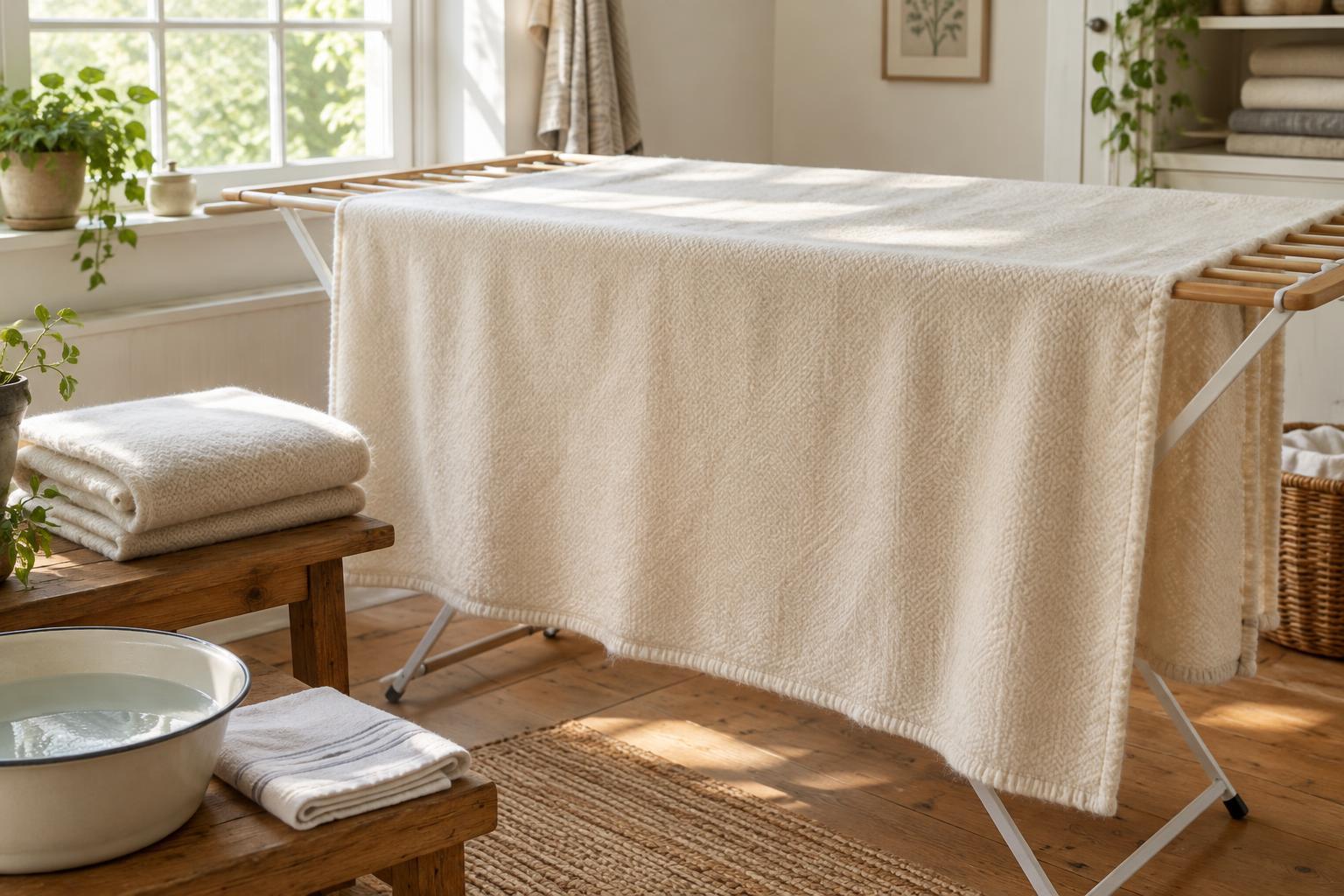
Spread the blanket flat on a drying rack with a supportive surface, or on dry towels where air can circulate. Smooth it into its natural shape without pulling at the edges. Turn it carefully as needed so both sides dry. Keep it away from radiators and other direct heat, and do not put it in a tumble dryer unless the care label specifically allows it. Wait until the thickest areas and folded edges feel completely dry before putting it away.
Store it clean, dry and easy to inspect
Clean or air a blanket before long-term storage, and make certain it is fully dry. Fold it loosely rather than compressing it into a tight bundle. A breathable cotton bag or a clean, lidded storage space can help keep dust off while allowing you to check the blanket easily. Choose a dry location away from damp walls, leaks and strong sunlight.
Stored wool can attract fabric pests, particularly if it has been put away with food residue or other soil on it. Inspect blankets and nearby textiles periodically for holes, shed fibers or other signs of activity. Vacuuming the storage area and keeping textiles clean are more useful habits than relying on a scented sachet to protect them. When you bring a blanket back into use, unfold it and let it air before placing it on a bed or sofa.