Start with the fiber, then look at the fabric
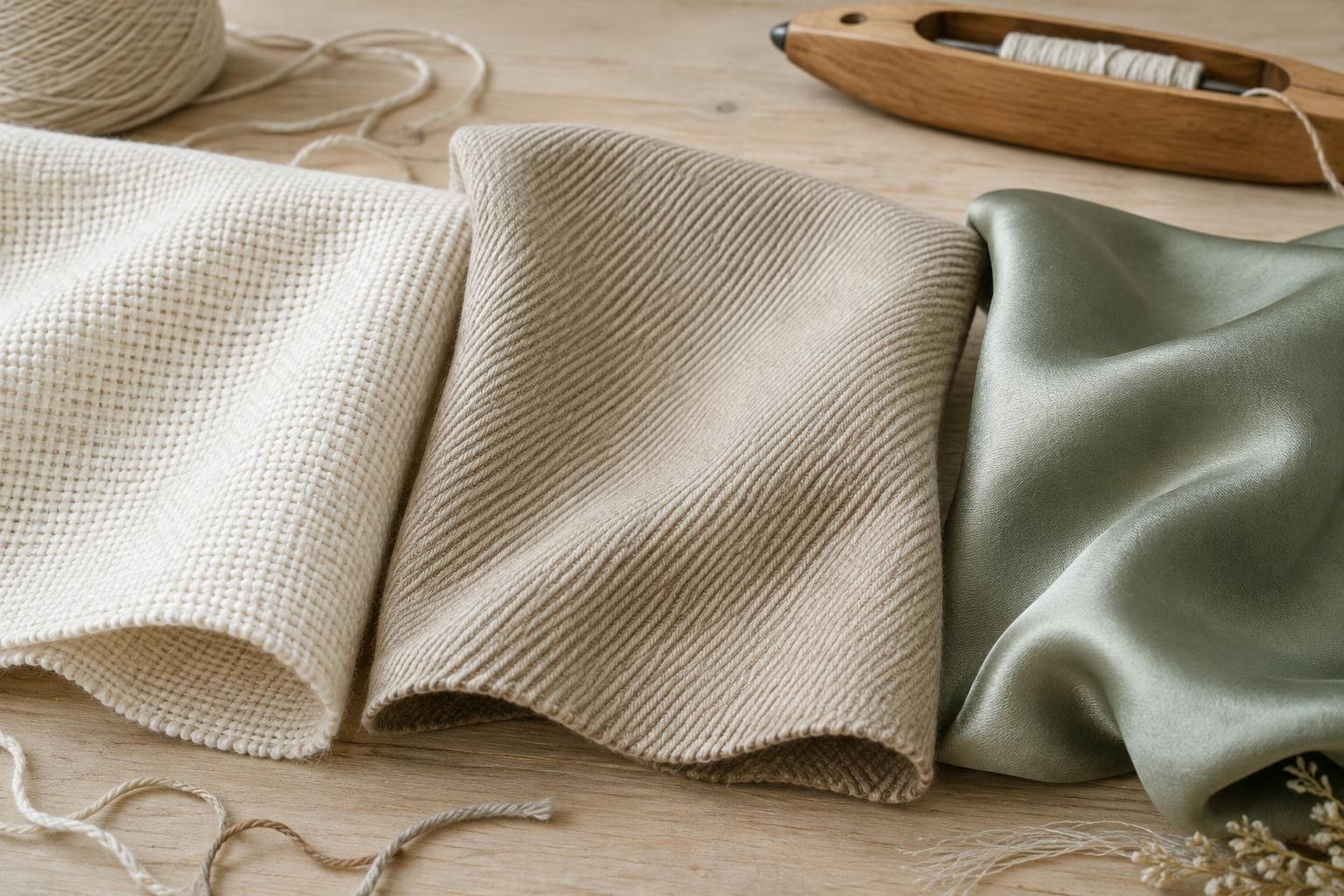
The fiber is only one part of a home textile. Yarn thickness, weave or knit, finishing treatments and fabric weight also affect how a cushion cover, throw or curtain behaves. A tightly woven cotton can feel crisp, while a loosely woven cotton may feel soft and relaxed. Fiber labels are useful starting points, but they cannot tell you everything about a finished fabric.
Natural fibers come from plants or animals. Common home-textile examples include cotton and linen, made from plant fibers, and wool and silk, made from animal fibers. Synthetic fibers, such as polyester, nylon and acrylic, are manufactured from chemical feedstocks. Viscose and lyocell sit in a different group: they are manufactured fibers made from cellulose, usually derived from wood. Knowing these distinctions makes comparisons more useful than treating every non-natural fabric as the same.
Feel, temperature and drape
Cotton is often chosen for its familiar, soft feel, while linen tends to have a firmer texture that relaxes with use. Both absorb moisture, which can make them comfortable to handle and useful for items such as napkins or lightweight throws. Wool can provide warmth and resilience in a blanket or cushion, although its feel varies greatly with the type of wool and how the fabric is made. Silk has a smooth surface and fluid drape, but it may need gentler handling.
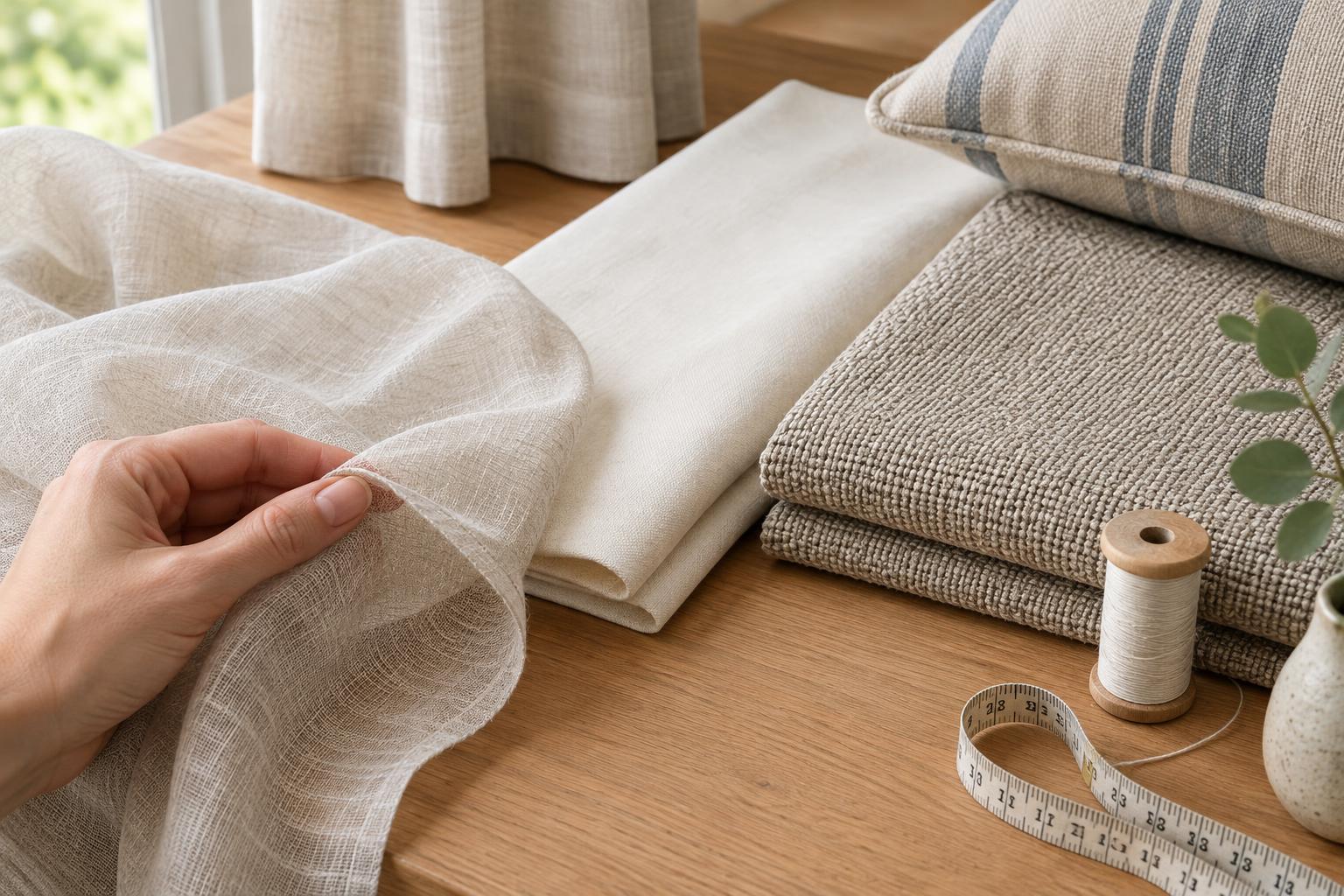
Synthetic fibers offer a wide range of textures because manufacturers can vary the fiber and fabric construction. Polyester can be made into a smooth curtain, a plush throw or a textured upholstery cloth. Many synthetics absorb less moisture than cotton or linen, so they may dry faster after washing but feel less absorbent as towels or table linens. For curtains, drape depends as much on fabric weight and weave as on fiber content; it is worth handling a sample if the way it hangs matters.
Wear, wrinkles and everyday care
For busy household pieces, compare the demands of the object with the care label. Linen wrinkles readily, which can be part of its appeal on a casual table but less welcome in sharply tailored curtains. Cotton can also crease and may shrink if washed or dried in a way the fabric does not tolerate. Wool often springs back from light creasing, yet some wool textiles can shrink or felt with heat and agitation. Delicate silk may show water marks or abrasion more easily than a sturdier fabric.
Polyester and nylon are often chosen for durability and wrinkle resistance, though neither quality is guaranteed for every fabric. Some synthetic fabrics can pill, and high heat may damage or distort them. Blends can balance properties: a cotton-polyester cloth might crease less than a comparable all-cotton one, while a linen blend may soften linen’s pronounced wrinkles. Finishes, seams and construction also affect longevity, so check the whole item rather than choosing by fiber name alone.
Cleaning, light and other trade-offs
Before buying washable cushion covers, table runners or throws, check whether the finished item can actually go in a machine. Linings, trims and dyes may require different care from the main fabric. For frequently washed pieces, a removable cover and straightforward care instructions can matter more than a small difference in fiber content. Testing a cleaning method on an inconspicuous area is sensible when care information is unclear.
Light and heat also deserve attention. Prolonged sunlight can fade many dyed fabrics and weaken some fibers; the effect depends on the material, dye and exposure. Keep textiles away from open flames and hot surfaces, and follow any safety requirements that apply to the intended use. No broad fiber category is automatically the better environmental choice, either. A textile’s impact depends on factors including production, processing, how long it is used and how it is cared for.
Choose for the job, not the label alone
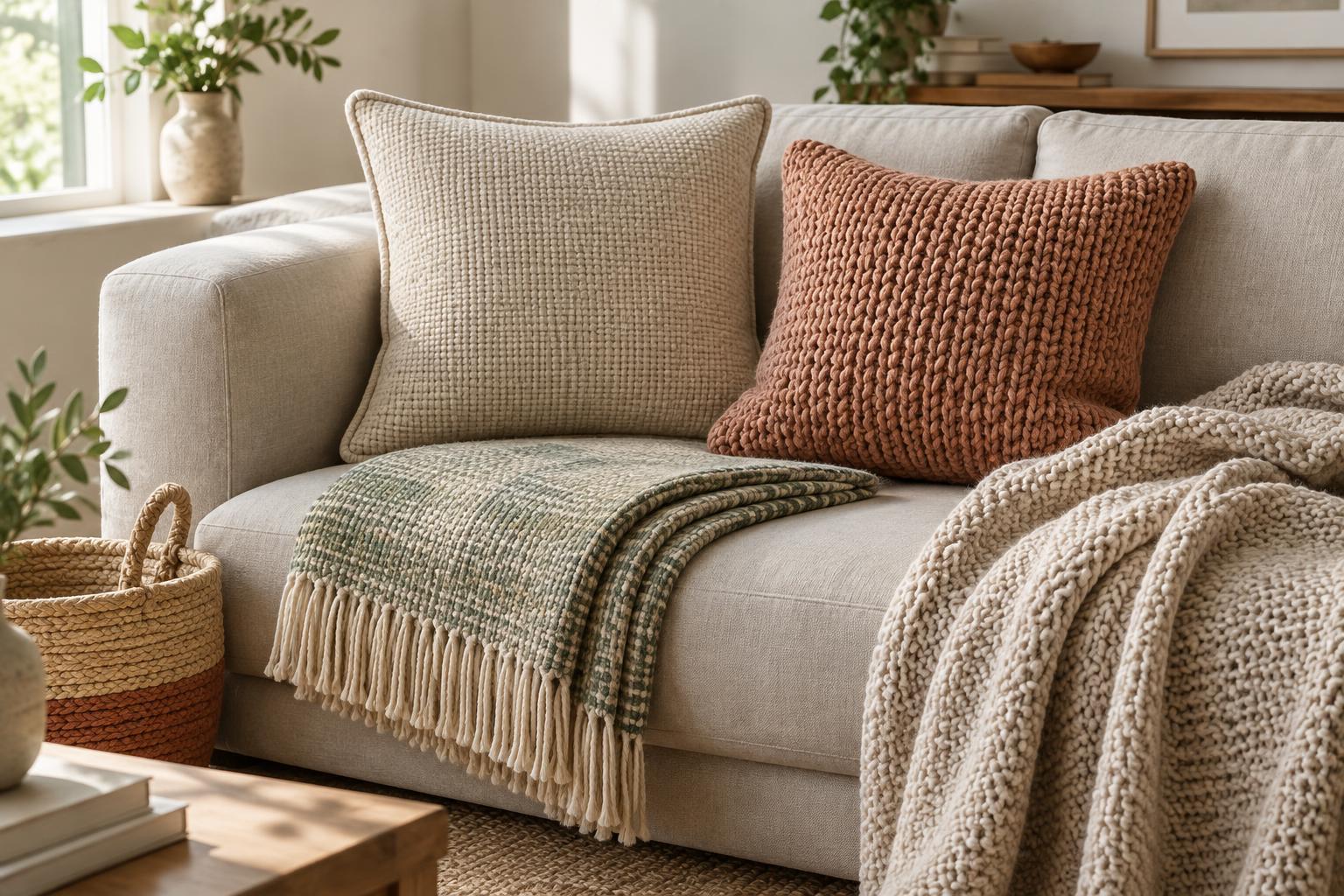
For an informal table setting, linen offers texture and a relaxed look, while cotton can be a versatile choice when easy washing is a priority. A wool throw may suit a space where warmth is wanted; a polyester throw may appeal if quick drying and simple care matter more. Curtains call for particular attention to weight, lining and drape. On a cushion, consider whether the cover will be decorative or used every day, then look at its weave, seams and cleaning instructions.
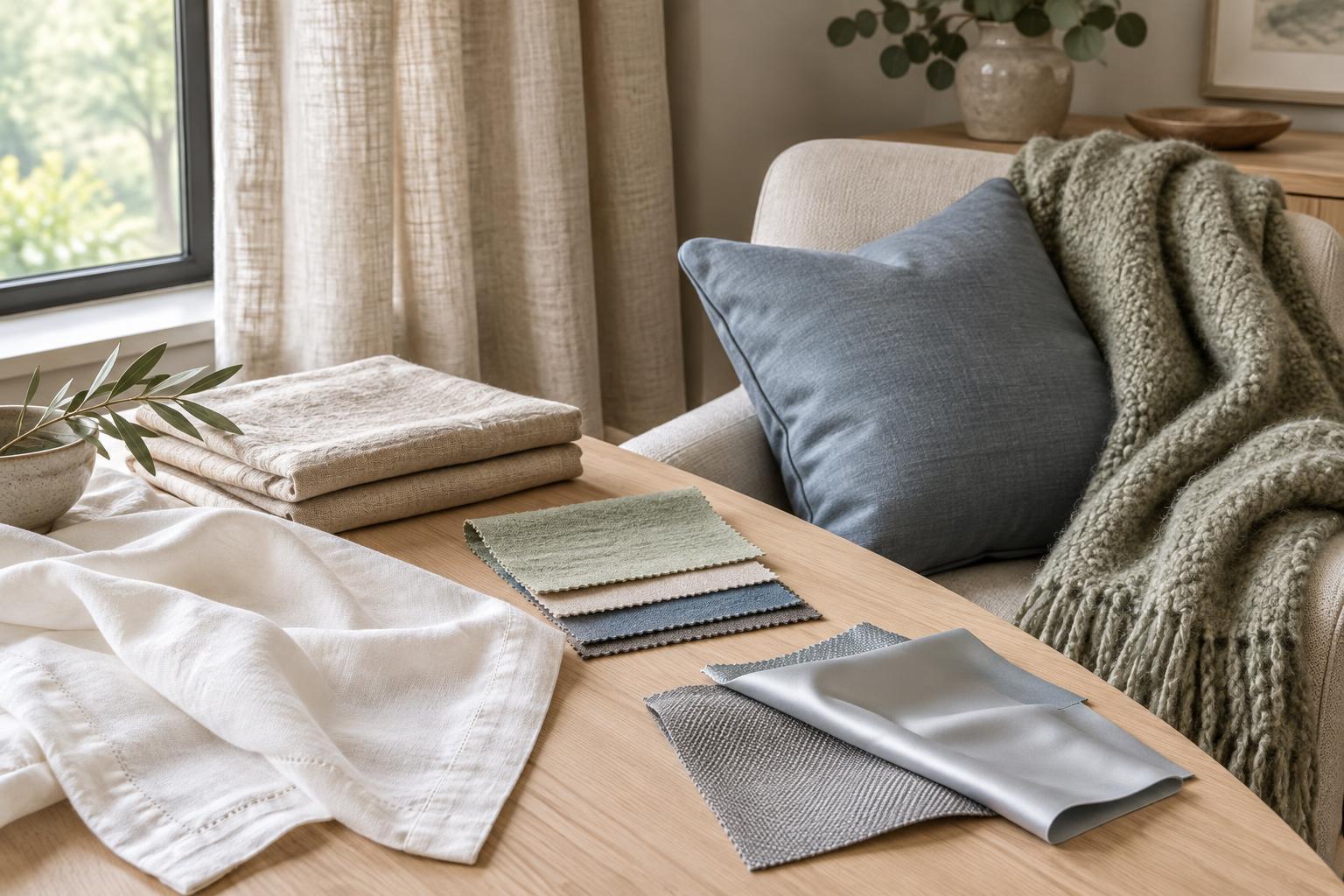
If possible, compare fabric samples in the room where the textile will be used. Feel their texture, hold them up to the light and see how they fold. Natural and synthetic fibers are not opposing grades of quality: each offers different possibilities and limitations. The best choice is the finished textile whose appearance, feel and upkeep fit its place in your home.