What a maker’s mark can tell you
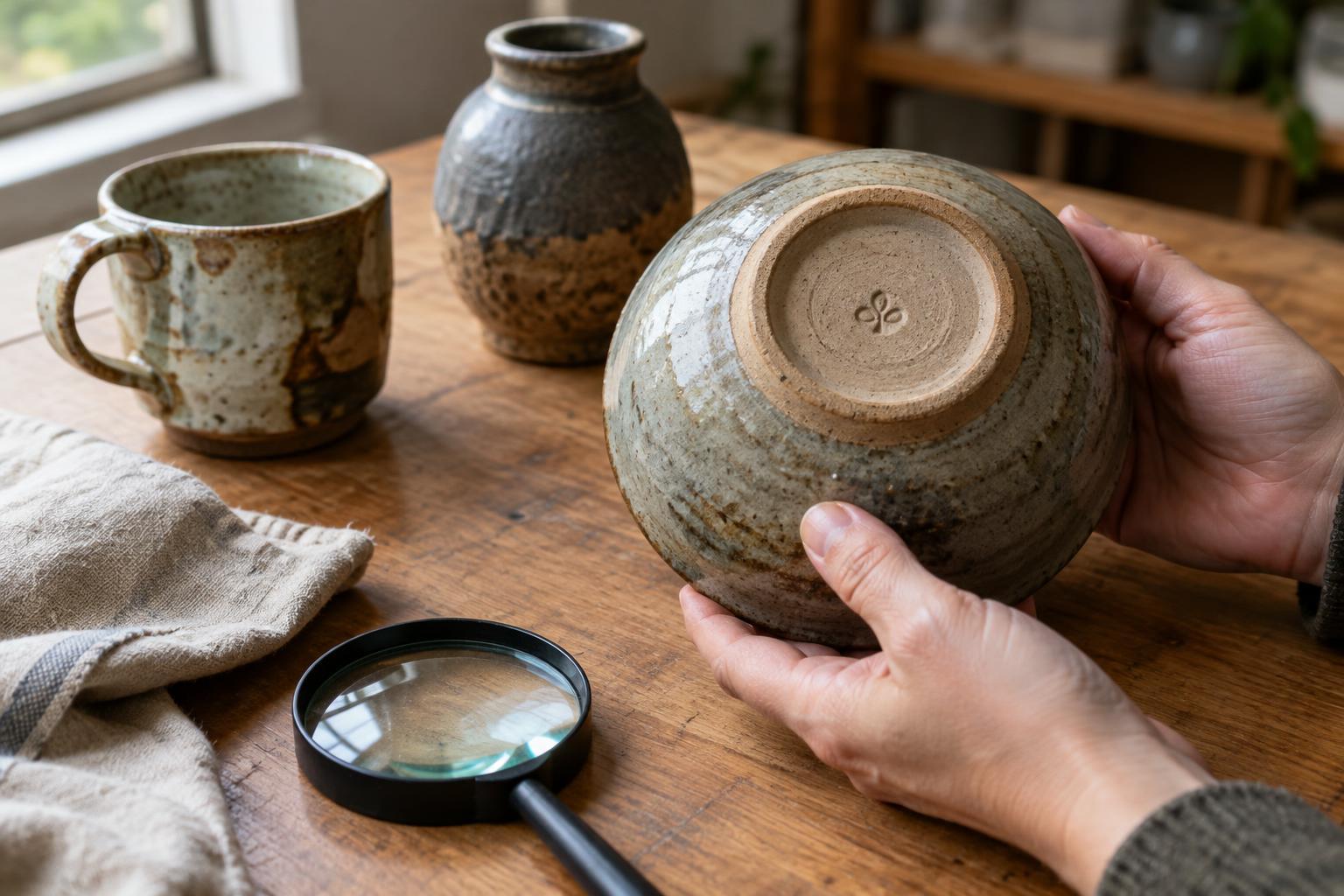
Turn over a handmade bowl and you may find an initial pressed into the clay, a small painted symbol or a name scratched across the foot. These are all forms of maker’s mark: details added to connect a piece with a person, workshop or pottery. Some makers use the same mark for years; others change it, share a workshop stamp or leave work unsigned. A mark is a useful starting point, not a complete record of who made an object.
A mark also needs to be read alongside the pot itself. Form, clay colour, glaze, decoration and the way the foot is finished can support or complicate a possible identification. Two similar-looking initials, for example, may belong to different makers. Conversely, pieces by one potter may look quite different as their techniques and interests change.
Where to look and how marks are made
The base is the most common place to begin, especially the unglazed foot ring or the flat area inside it. Check the lower wall and the underside of a handle too. Tilt the pot gently under a soft light: a shallow impression may appear more clearly when light falls across it than when you look straight down. If the object is heavy, fragile or unusually shaped, support it with both hands over a padded surface rather than balancing it upside down.
An impressed mark is pressed into damp clay, often with a stamp. An incised mark is cut or scratched into the surface. A painted mark is applied with a brush, while a raised mark may be formed by a mould. These methods can help you describe what you see, but they do not establish the maker on their own. Glaze may partly fill an impression, and firing can soften a small detail, making a letter look like a symbol—or the reverse.
Read the whole object, not just the letters
Start by describing the mark before trying to decipher it. Note its position, approximate size and orientation, whether it sits under or over glaze, and whether its edges are crisp or faint. Record what is visible rather than what you hope it says: “two joined letters” is more reliable than assigning a name to an ambiguous monogram. A simple sketch can help you notice spacing and shapes that are easy to miss in a photograph.
Then look at how the mark relates to the construction of the piece. Is the foot carefully turned or roughly cut? Does the clay visible at the base match exposed clay elsewhere? Is the decoration brushed, dipped or applied in another way? None of these observations provides a guaranteed date or attribution. Together, however, they build a fuller description that can be compared with other examples. A polished factory mark and a small studio stamp may look different, but workshops and individual makers have used many approaches, so avoid treating either appearance as a fixed rule.
Document clues without damaging the pot
Take clear photographs of the entire object, its profile, the base and a close view of the mark. Include a ruler in one image for scale, and photograph the mark from more than one lighting angle if it is shallow. Write down dimensions and any history you already know, such as where the pot came from or whether a label accompanied it. Keep labels or notes with your record even if you do not display them on the object; they may explain more than the mark alone.
Resist the urge to scrub a hard-to-read base. Abrasive pads, sharp tools and strong cleaners can remove surface details or leave scratches. Loose dust can often be lifted gently with a soft, dry brush. If there is stubborn residue, it is safer to leave it in place while you document the piece than to risk changing the surface to expose a possible signature.
Make an attribution with appropriate caution
If you compare your mark with examples from catalogues, collections or a maker’s own records, look for more than a matching outline. Check the direction of strokes, spacing, method of application and whether the associated pots share relevant features. Be alert to marks that are partly obscured or viewed upside down. A convincing comparison accounts for differences as well as similarities.
When the evidence remains incomplete, describe the object plainly: “stoneware vase with an impressed two-letter mark” may be more useful than an uncertain maker’s name presented as fact. You can add that an attribution is possible without treating it as settled. This careful approach preserves the pleasure of looking closely at studio pottery. Even when a mark cannot be identified, it can prompt a richer understanding of how the pot was formed, finished and handled.