Why a Boundary Helps
A table display can feel scattered when its objects have no obvious relationship to one another. A candle, a small bowl, and a vase may each look appealing, but spread across a tabletop they can compete with the room’s everyday activity. A tray gives them a shared footprint. It signals that the objects form one arrangement while leaving the surrounding surface open.
That boundary is especially useful on tables that serve more than one purpose. On a coffee table, it leaves space for a book or a drink. On a dining table, it makes a centerpiece easier to move when the table is needed for a meal. The goal is not to fill the tray. It is to make a small collection feel deliberate without taking over the surface.
Choose a Tray That Fits the Table
Start with the available space rather than the objects you want to display. Set a placemat, sheet of paper, or similarly sized item on the table to test a possible footprint. Walk around the table and check whether there is still room for the things people normally put there. A tray that looks modest on its own may feel large once it holds a vase or other tall object.
Shape can help the tray sit comfortably in its setting. A long, narrow tray can follow the line of a console or rectangular dining table; a round tray can soften a table with many straight edges. These are starting points, not rules. Pay attention to practical details as well: a raised rim can keep small pieces together, while handles make it easier to lift a display out of the way.
Consider how the tray’s material relates to the objects and tabletop. Wood can add warmth to a smooth surface, and ceramic or metal can provide contrast against wood. If the table scratches easily, check the tray’s underside before using it and add discreet protective pads if needed.
Build a Display with Space Between Objects
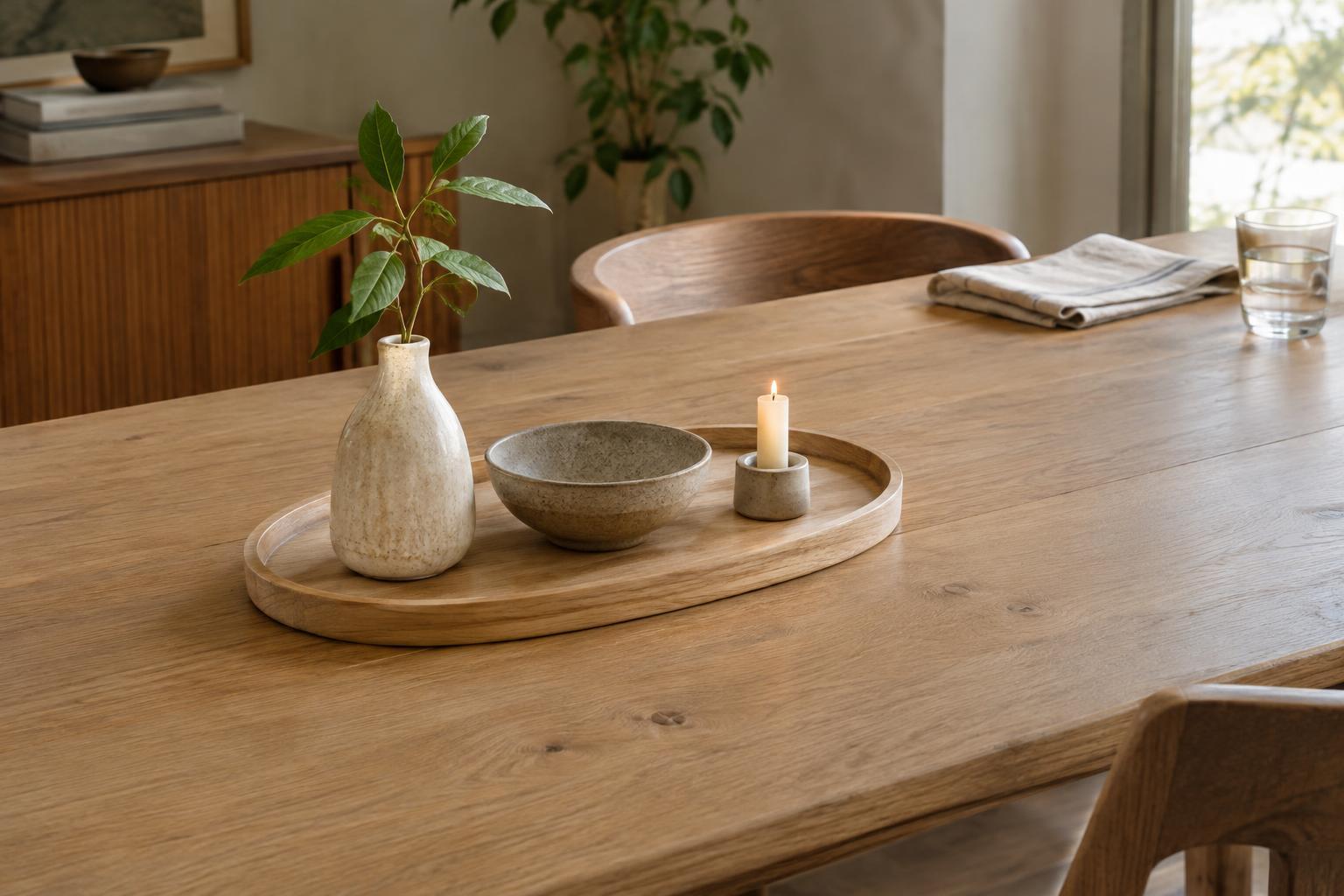
Begin with one anchor: perhaps a low vase, a lidded vessel, or a substantial candle holder. Place it slightly off center, then add one or two smaller pieces that relate to it through color, material, or use. A dish for matches beside a candle, for example, has a clear reason to be there. You do not need to match every finish; a limited range of tones can make varied objects feel connected.
Vary height and shape so the arrangement is easy to read. Pair an upright object with something low and broad, such as a shallow bowl. If everything is the same height, the group may look flat; if everything is tall, it may block a view across the table. Step back and look from the seats people actually use, not just from directly above.
Leave part of the tray visible. That open area is what lets its shape act as a boundary rather than disappear beneath a pile of objects. If the tray has a pleasing grain, weave, or glaze, the uncovered surface becomes part of the display.
Keep the Arrangement Useful
A tray can hold objects that belong on the table, not just decorative pieces. On an entry table, it might contain a small catchall dish and a single stem in a vase. On a coffee table, it could group coasters with a decorative object. Choose items that suit the table’s daily role, and resist adding anything that regularly has to be moved before the surface can be used.
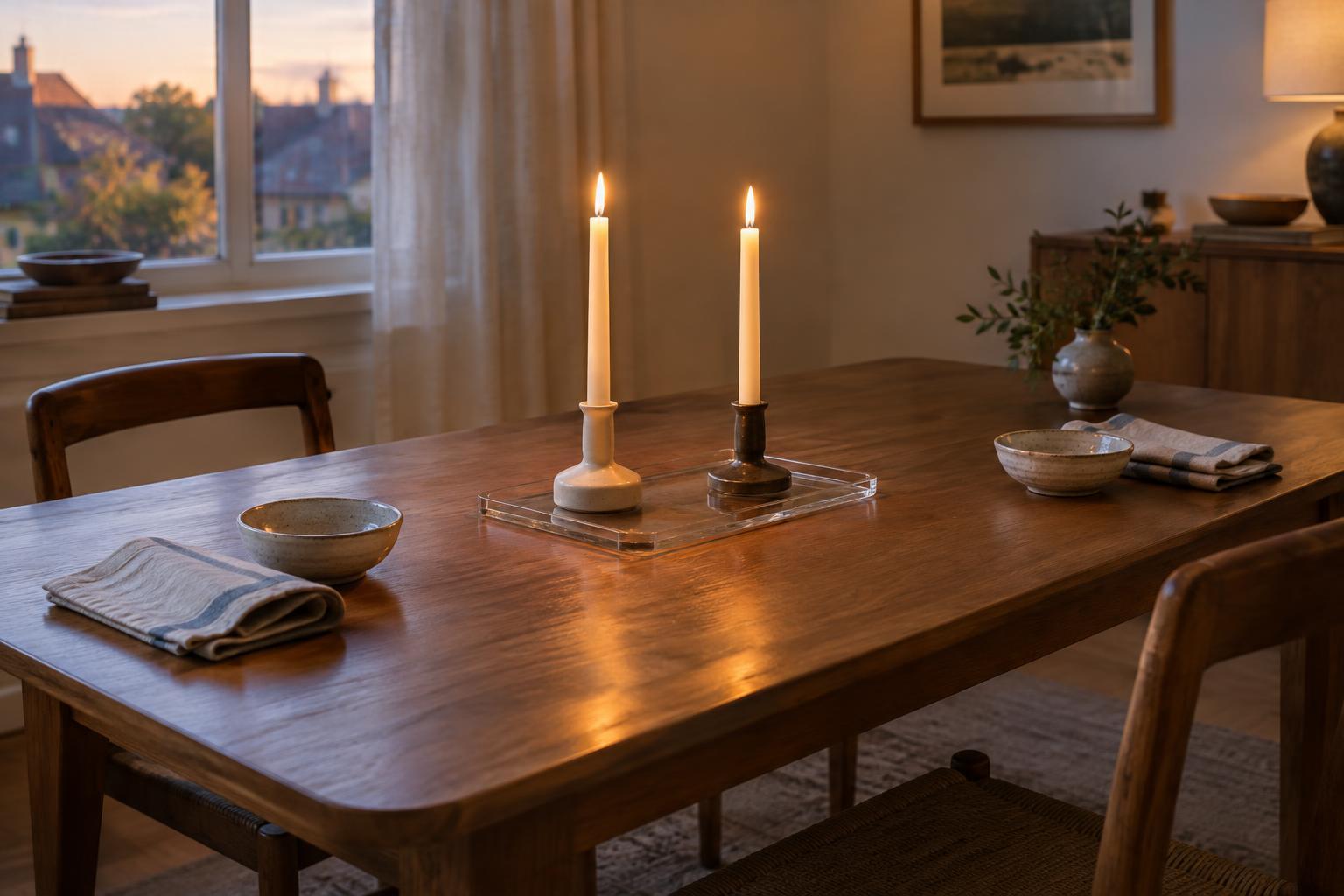
Take care with objects that may spill, drip, or leave marks. Put cut flowers in a stable vessel, wipe moisture from its base, and avoid placing a lit candle close to foliage or fabric. If the tray holds drinks or food, use a surface that is suitable for that purpose and easy to clean. Practical limits can guide a better arrangement than ornament alone.
Edit the Display as the Table Changes
Once the tray is styled, live with it for a few days. Notice whether people set things around it comfortably, whether anything is awkward to reach, and whether moving the tray is simple. If the arrangement gets in the way, remove an object or choose a smaller tray. A clear boundary works only when there is enough useful table left outside it.
You can refresh the display without rebuilding it. Keep the tray and anchor piece, then change one smaller object to suit what is being used or made at home. This approach gives the table a consistent structure while allowing the details to evolve. The tray’s job remains the same: gathering a few considered objects in one place and giving everything else room to breathe.