Start with the job, not the finish
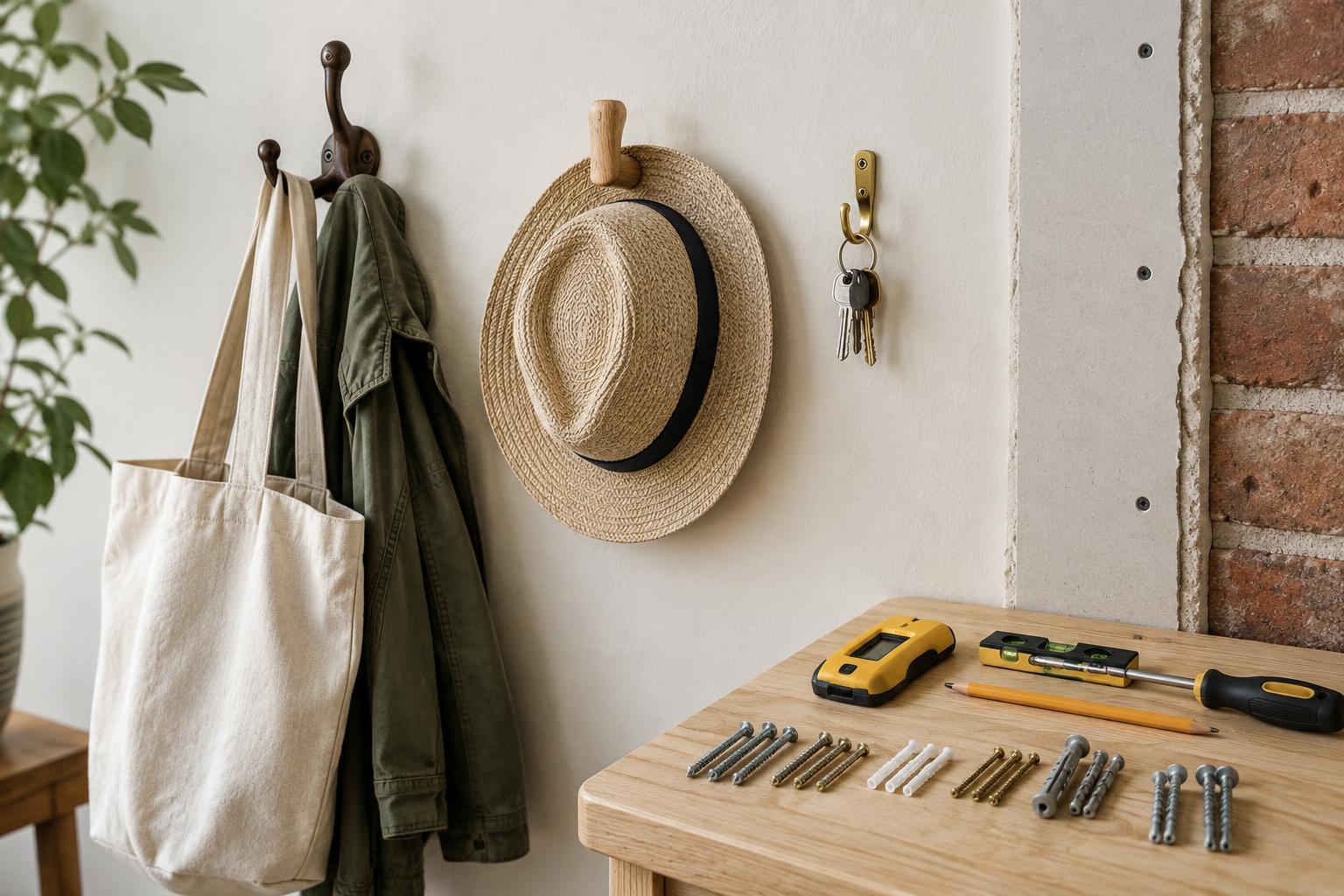
A row of hooks can be both useful and decorative: brass pegs by the door, painted wooden knobs in a bedroom, or ceramic hooks beside a bathroom sink. Their shape and finish matter, but first decide what each hook will hold. A single lightweight scarf asks less of its fixing than a bag filled with books. A coat hook may also carry several garments at once, even if you planned for only one.
Think about how the item hangs as well as how much it weighs. A load that rests close to the wall generally places less leverage on a fixing than one hanging from the tip of a long peg. Pulling a bag off a hook, replacing it in a hurry, or bumping it as you pass can add strain. For hooks used every day, choose a fixing with a comfortable margin over the load you expect, rather than treating a stated capacity as a target.
Match the fixing to the wall
The same screw will not hold equally well in every surface. A screw driven into a sound timber stud or solid wood backing can provide a firm attachment when sized and installed as the hardware maker specifies. On plasterboard or drywall without a stud behind it, use an anchor intended for that wall type and for the expected load. A small plastic plug suitable for a modest accessory should not be assumed to support a heavy, frequently used hook.
Masonry, tile, and older plaster need different approaches. Masonry fixings must suit the particular brick or concrete and the condition of the wall. Tile requires care when drilling to avoid cracking it; the fixing must grip the sound material behind the tile, not just the glazed surface. Older plaster can be crumbly or detached in places, so a fixing that feels loose during installation is a reason to stop and reassess rather than keep tightening.
Check the instructions and load guidance for the hook, screws, and anchors together. The weakest component limits the assembly. Published load figures may depend on a particular wall construction and installation method; they are not a promise for every wall. If you cannot identify what is behind the surface, or the intended load is substantial, get help choosing an appropriate fixing.
Look closely at the hook itself
A strong anchor cannot compensate for a flimsy hook. Look at how the hook attaches to its base: a single small screw, a pair of mounting holes, and a concealed bracket offer different levels of stability. A broad base may help keep a hook from twisting, while two well-spaced fixings can be useful where bags or coats are lifted on and off often. Follow the maker’s installation instructions rather than substituting screws simply because they fit through the holes.
Material and shape affect everyday use. Rounded ends are kinder to knitted loops and fabric straps than sharp edges. A deeper curve helps keep a coat from slipping, while a shallow peg can suit a small hanging decoration. Decorative ceramic or wooden parts may be perfectly suited to light duties but may not tolerate being used as a handle. If children might pull on a hook, place it and select its fixing with that possibility in mind.
Plan a layout that stays practical
Before drilling, hold the objects in place and check their spacing. Hooks set too close together can make coats bunch up and hide the decorative details you chose. Leave room below long garments and beside cupboard doors, light switches, or furniture. For a grouped arrangement, decide whether every hook needs to carry the same load. A peg intended for keys can be smaller and more delicate than one intended for a work bag.
A rail with several hooks can create a tidy composition, but its mounting points must support the combined use of the rail. Attaching the rail securely to suitable backing is more important than the number of hooks on its face. Adhesive hooks may be convenient for very light objects on approved, clean surfaces, but humidity, surface coatings, and removal can affect how they perform. Check their guidance carefully and avoid using them for breakable or heavy items.
Install, test, and revisit
Mark the positions, check for hidden pipes or wiring before drilling, and use the method specified for the wall and fixing. Once installed, check that the base sits flat and does not rotate. Test a new hook gradually with an appropriate item while watching for movement, cracking, or a gap opening around the fixing. Do not hang a prized ceramic piece or a heavy bag from a hook that already feels uncertain.
Hooks are small fittings that receive repeated use, so look at them occasionally. A loose screw, shifting rail, or damaged wall surface calls for attention before the hook is used again. With the right pairing of hook, fixing, and wall, a decorative detail can earn its place in the room by working reliably as well as looking good.